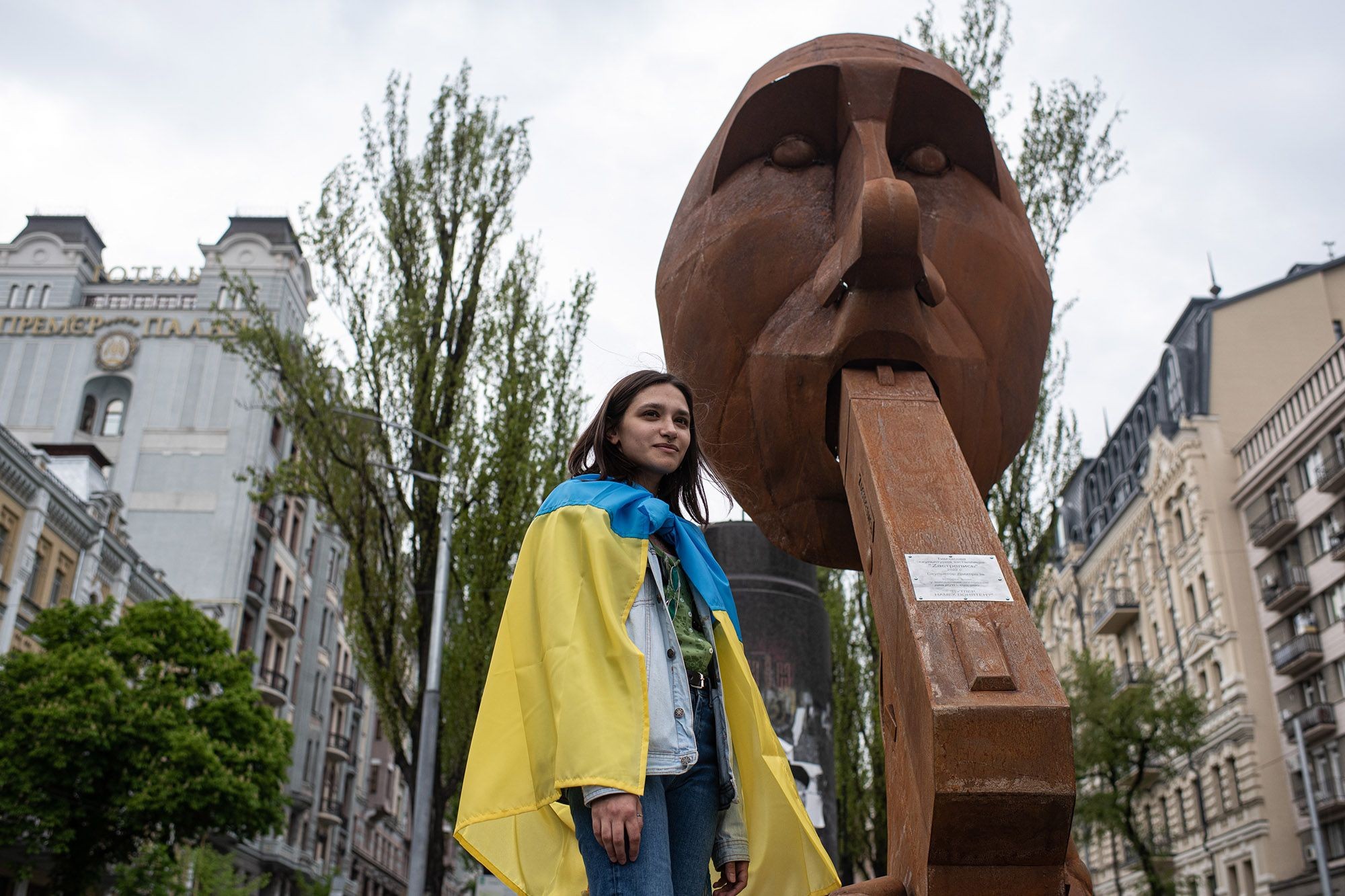
“Shoot Yourself”, η εγκατάσταση του Ουκρανού καλλιτέχνη Dmitry Iv στο Κίεβο, που αφαιρέθηκε από τον δημόσιο χώρο μέσα σε 8 ώρες.
DS.WRITER:
Sophia Throuvala
Κεντρική Εικόνα: nypost.com
Από τις μαζικές αποκαθηλώσεις του Lenin στην Ουκρανία του ’90 ως το πρόσφατο εξάμετρο σιδερένιο κεφάλι του “αυτόχειρα” Putin.
Τι είναι Τέχνη σε περίοδο πολέμου (Art and War); Ποια η σημερινή εκδοχή/εκδοχές της; Σύμφωνα με τη Laura Brandon, ο ορισμός είναι δύσκολος για το “είδος” αυτό καλλιτεχνικής παραγωγής, καθώς το θέμα είναι ευαίσθητο στην προσέγγισή του και δεν χωράει σε στενούς ορισμούς. Σύμφωνα με την ίδια, η “πολεμική” τέχνη διατρέχει όλη την ιστορία του πολιτισμού μέχρι σήμερα. Τέτοια τέχνη θεωρούμε σήμερα την προπαγανδιστική, την καταγραφική (documentation), τα memorials και τα αντιστασιακά έργα στον δημόσιο χώρο. Στην τελευταία κατηγορία εμπίπτει και η εγκατάσταση “shoot yourself”, που αφορά το παρόν άρθρο. Συνοπτικά, πρόκειται για μια μορφή καλλιτεχνικής έκφρασης που σχολιάζει, καυτηριάζει ή μνημονεύει. Όποια κι αν είναι η εκδοχή της, σίγουρα αφορά τη συλλογική μνήμη τη στιγμή που αυτή γεννάται. Πρόκειται για ζωντανούς οργανισμούς, που προκαλούν και προωθούν ίσως τη συμμετοχή του θεατή, με έναν τρόπο ιδιαιτέρως προσωπικό.
Τον περασμένο αιώνα, η τέχνη του πολέμου ήταν κυρίως οι προπαγανδιστικές αφίσες, η ζωγραφική και λιγότερο η γλυπτική, η οποία ερχόταν να κλείσει τις ανοιχτές πληγές με την ανέγερση μνημείων πεσόντων, ανδριάντων για την αναπτέρωση του ηθικού ή, σε άλλες περιπτώσεις, για την εξύμνηση κάποιου θριάμβου. Στους τόπους αυτούς που ανεγείρονται τέτοιου είδους -γλυπτά- μνημεία, γίνεται μια μετατόπιση του λαϊκού συναισθήματος και μια μεταβολή τού εκάστοτε σημείου σε κάτι το μεταφυσικό, σε έναν τόπο ιερό, σε έναν τόπο μνήμης, σε έναν τόπο ταυτότητας. Οι χώροι αυτοί, παρόλο που μοιάζουν -εξαιτίας της παρουσίας κάποιου συμπαγούς και ογκώδους γλυπτού- σταθεροί και άκαμπτοι, φαίνεται να είναι άκρως μεταβλητοί και να ντύνονται συχνά, ανάλογα τις συγκυρίες, με νέα νοήματα που αφορούν νέες πραγματικότητες. Τα σοβιετικά μνημεία, τα γλυπτά δηλαδή του Στάλιν και του Λένιν, μεταμόρφωσαν κατά κανόνα τους χώρους που “κατέλαβαν” με το βάθρο τους, που σύμφωνα με την Krauss (“Sculpture in the expanded field”, ’79) ενώνει το υπαρκτό με το εννοιολογικό, σε χώρους ιεροποιημένους και συγκρουσιακούς.
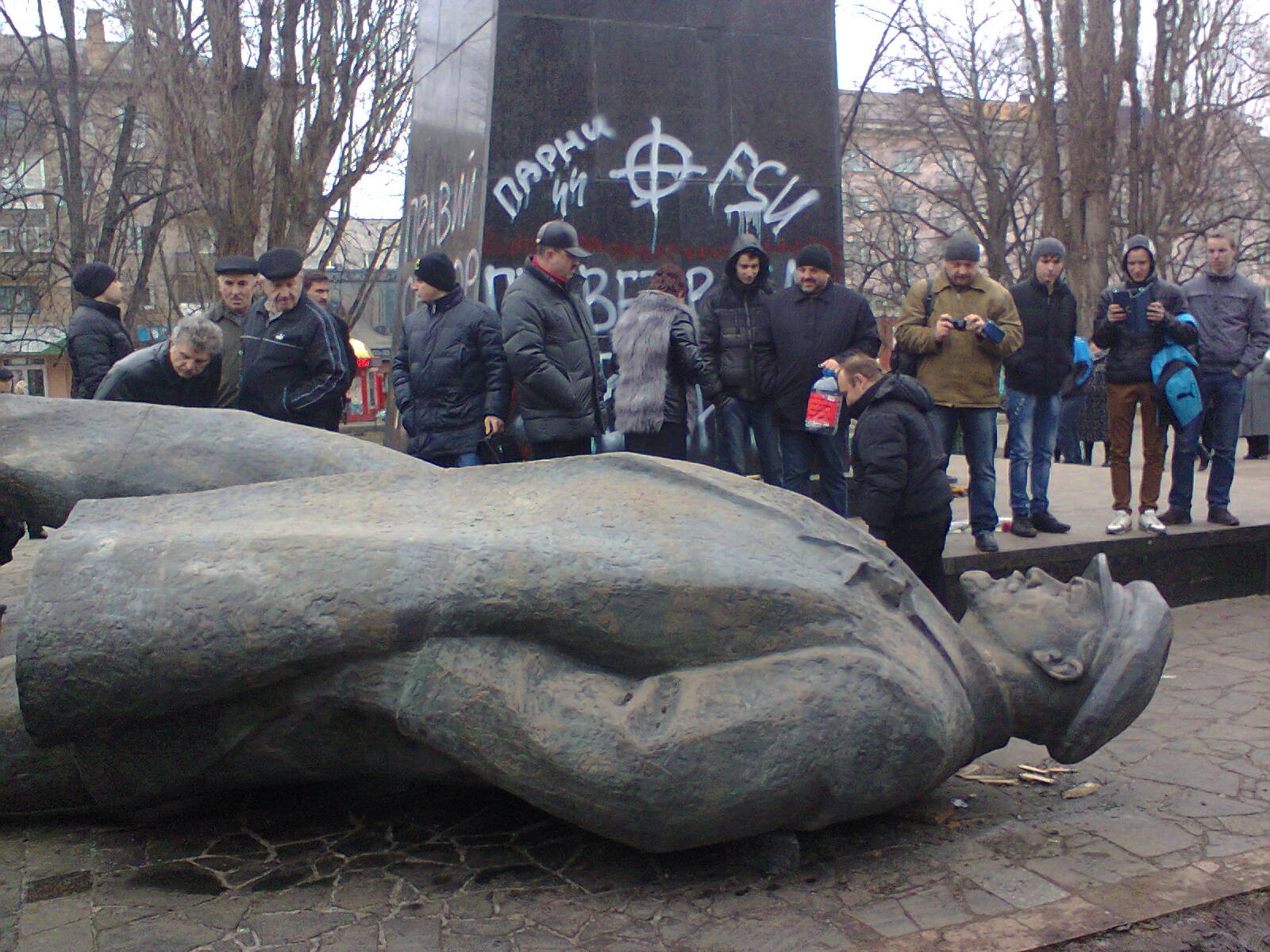
Από το 1989 και ύστερα, σημειώθηκε μαζική αποκαθήλωση των ανδριάντων αυτών, νοούμενων ως φορέων μιας σοβιετοκρατούμενης εποχής, “ξορκίζοντάς” τη με αυτόν τον τρόπο. Η ανιμιστική αυτή προσέγγιση του ανδριάντα, επειδή είναι ανθρωπομορφικός, αποτελεί μια πιο πρόσφατη εκδοχή παγανισμού, ή πιο σωστά μιας εικονοκλαστικής πράξης, που στόχο έχει την αποϊεροποίηση του μνημείου μέσω του εξευτελισμού του, δίνοντας έτσι μια εφήμερη διάσταση σε κάτι που έμοιαζε πριν ακλόνητο και επιβλητικό. Συγκεκριμένα στην Ουκρανία, η αποπομπή των ανδριάντων του Λένιν ξεκίνησε με την πτώση της Σοβιετικής Ένωσης. Το φαινόμενο αυτό (“decommunisation” όπως ονομάστηκε) απλώθηκε σε όλο το κράτος, με την καταστροφή των “Λένιν” σε 4 μεγάλες ιστορικές φάσεις -με την τελευταία να είναι το πρόσφατο 2014-, ενώ μάλιστα δημιουργήθηκε και όρος που περιέγραφε την πρακτική αυτή της κυριολεκτικής και συμβολικής πτώσης των μνημείων στο έδαφος, το λεγόμενο Leninopad (Ленінопад) (μτφ. “Leninfall").
Οι πρακτικές αυτές, STATUE POLITICS κατά Katherine Verdery (“The Political Lives of Dead Bodies. Reburial and Postsocialist Change”), που ανιχνεύονται κυρίως στα σοβιετικά μνημεία στη μετασοσιαλιστική εποχή, είναι ξανά επίκαιρα. Τον περασμένο Απρίλιο, η Guardian ανεβάζει άρθρο με τίτλο “Back in the USSR”, καυτηριάζοντας το γεγονός πως οι ανδριάντες του Λένιν επιστρέφουν στις κατακτημένες περιοχές της Ουκρανίας. Συγκεκριμένα, η πρώτη αποκατάσταση -αν μπορούμε να την ονομάσουμε έτσι- γίνεται στην πόλη Henichesk στην κεντρική πλατεία, έξω από το Δημαρχείο, στην οροφή του οποίου μάλιστα τοποθετήθηκαν Ρωσικές και Σοβιετικές σημαίες. Η ανέγερση μνημείων διατηρεί λοιπόν μια ποιότητα πολιτική, ένα είδος σήμανσης του κατακτημένου χώρου, η οποία παραμένει εύληπτη σε μια φόρμα ρεαλιστική που είναι ικανή να μετατοπίσει ακόμα και την έννοια του χρόνου, επαναφέροντας στη συλλογική μνήμη ένα τοπίο -προηγουμένως- χαμένο στο παρελθόν (Lisa Parola, “Giù i monumenti?” 2022).
en.wikipedia.org
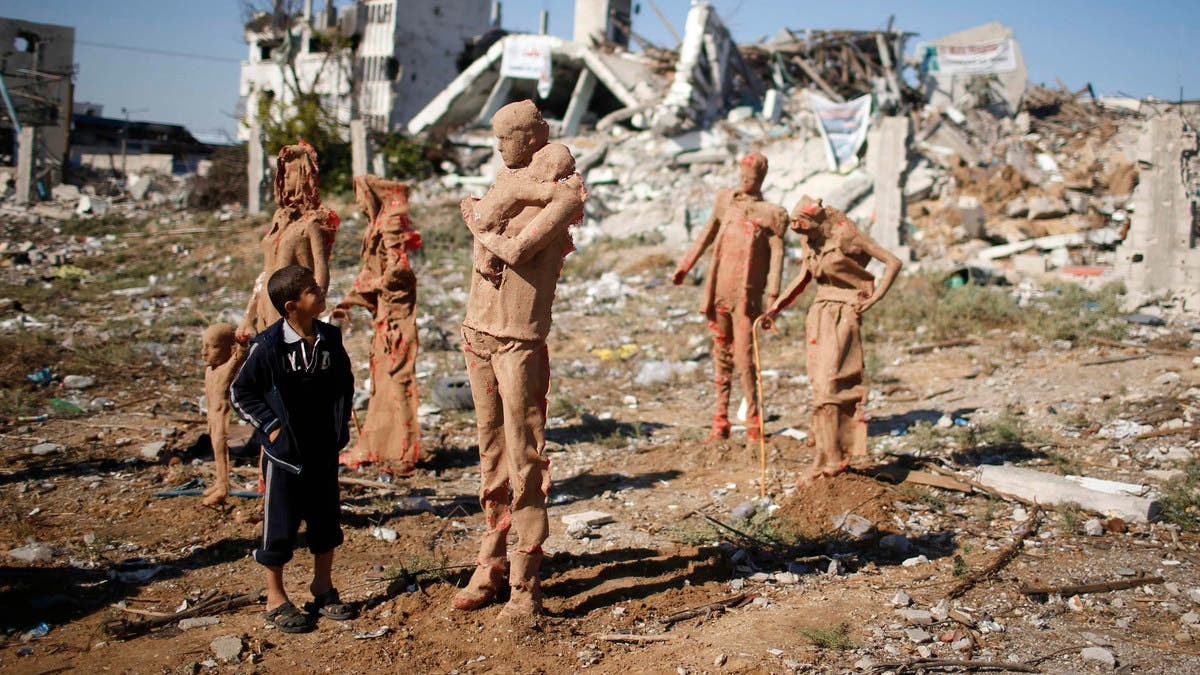
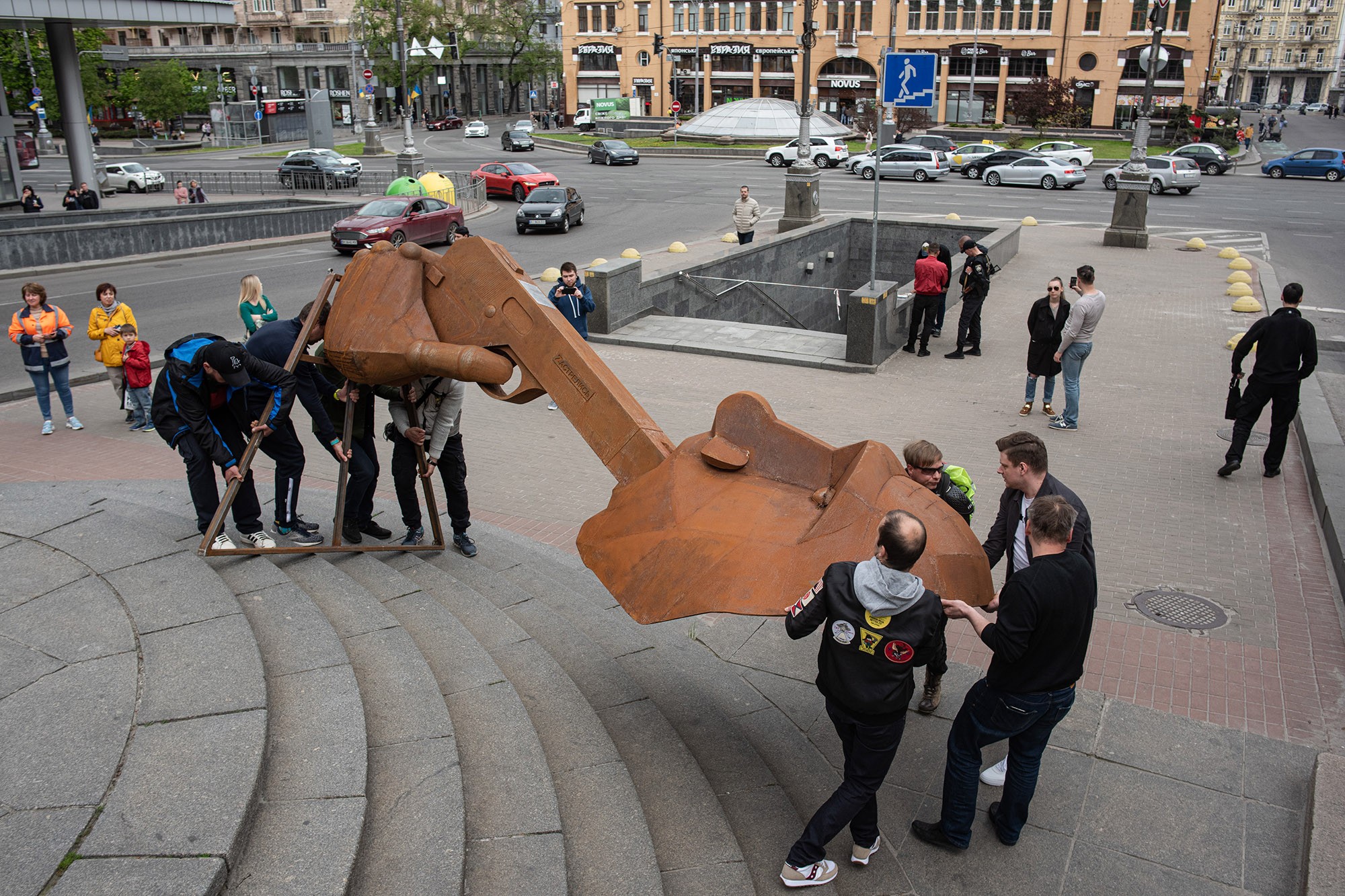
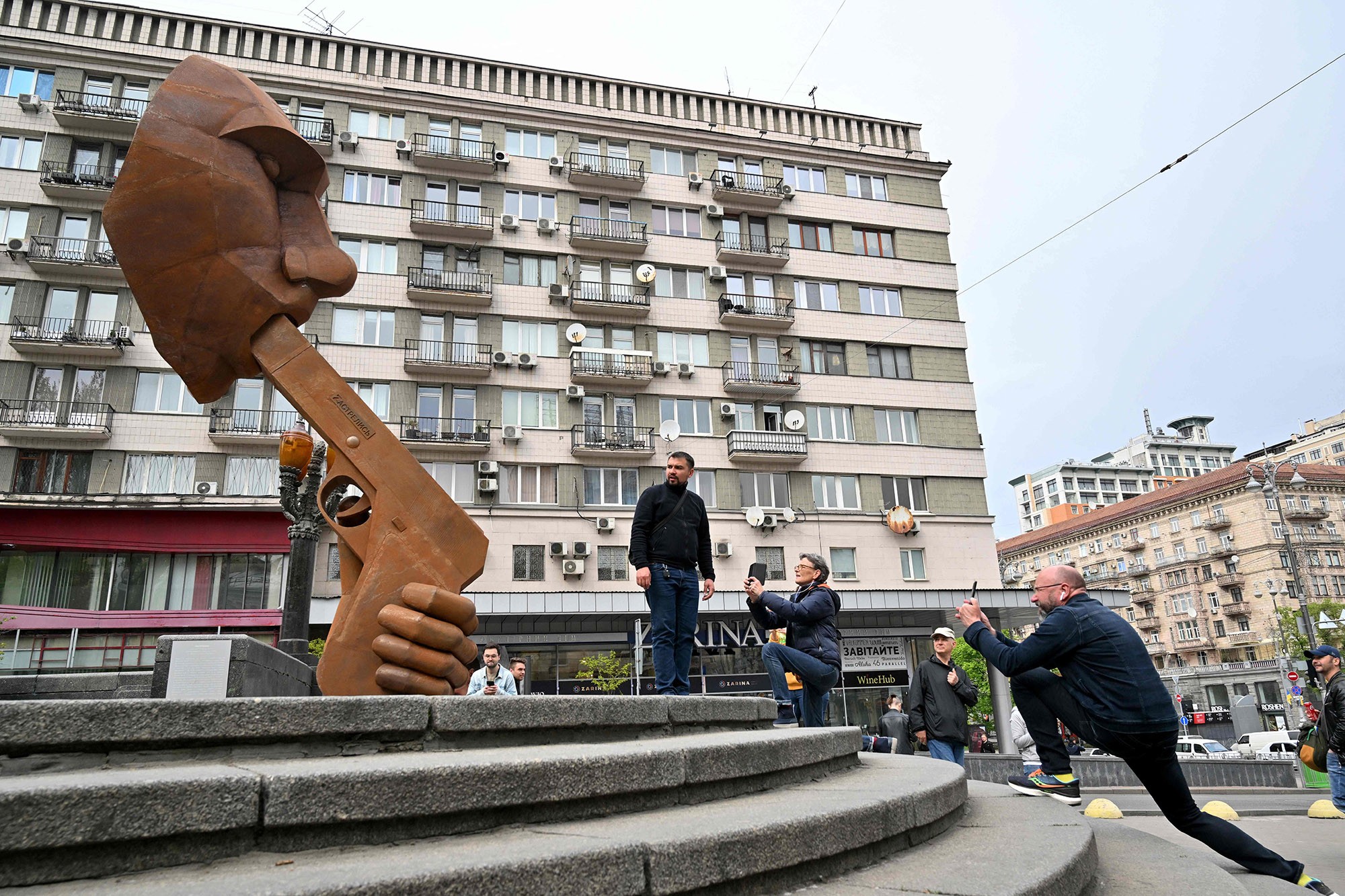
Στο Κίεβο, κοντά στο σημείο που κάποτε έστεκε ο ανδριάντας του Λένιν, ο γλύπτης Dmitry Iv τοποθέτησε ένα σύγχρονο έργο μεταξύ ανδριάντα και γελοιογραφίας. Το γλυπτό με τίτλο ‘Shoot Yourself’ είναι από εκείνα που μπορούν αρκετά εύκολα να κατηγοριοποιηθούν στα έργα “πολέμου” -όπως το σχετικά πρόσφατο (2014) έργο τού γλύπτη Iyad Sabbah με τίτλο Worn Out, στην Gaza μετά την καταστροφή της. Πρόκειται για ένα γλυπτό 6 μέτρων από σίδερο, μια αφαιρετική προτομή του Πούτιν, ο οποίος είναι έτοιμος να αυτοκτονήσει πιέζοντας ένα ρεαλιστικά αποδοσμένο όπλο στο στόμα του, στη ράχη του οποίου είναι χαραγμένο το “Putler, did you understand the hint?”
 english.alarabiya.net
Ο Ουκρανός καλλιτέχνης, αν και συνήθως δουλεύει με πιο μαλακά υλικά, δημιουργεί το συγκεκριμένο δημόσιο έργο από βαρύ μέταλλο, συμβολίζοντας -όπως ο ίδιος λέει- την τραχύτητα του πολέμου. “The war is tough - Steel is tough. There should be no beauty in this.” Η ιστορία της τέχνης στον δημόσιο χώρο έχει επίσης δείξει πως η στροφή σε πιο “σκληρά” υλικά έναντι των κλασικών λύσεων, πχ. μαρμάρου, προκύπτει αναπόφευκτα σε περιόδους αναταραχών, λόγω της ανθεκτικότητάς του και της ευκολότερης πρόσβασης σε αυτό -οικονομικότερο υλικό-, έναντι του εύθραυστου και πολυτελούς αστραφτερού μαρμάρου. Το έργο ακολουθεί κι αυτό την πορεία των ανδριάντων, μετά από μόλις 8 ώρες παρουσίας στην Πρωτεύουσα της Ουκρανίας. Μεταφέρθηκε σε αποθήκη του Κιέβου, καθώς ήταν ένα έργο που δεν είχε πάρει άδεια τοποθέτησης(!). Ο γλύπτης είναι βέβαιος πως το έργο έχει αποσυρθεί παροδικά και πως σύντομα θα εμφανιστεί σε κάποια νέα πλατεία, ίσως σε κάποια άλλη πόλη ή χωριό της Ουκρανίας.
nypost.com
Η κίνηση αυτή, βαθιά ριζοσπαστική, θέτει το ερώτημα της λογοκρισίας. Πώς ένα κράτος σε καθεστώς πολέμου θεωρεί πως ένα έργο τέτοιου τύπου θα έπρεπε να έχει πάρει άδεια για την έκθεσή του στον δημόσιο χώρο; Ποιος ο δημόσιος διάλογος γύρω από αυτή την κίνηση; Ποια η στάση του κόσμου της τέχνης στο ζήτημα του Ρωσο-Ουκρανικού πολέμου;
Υπό το φως των φρικιαστικών ειδήσεων σχετικά με την Ουκρανία, ο κόσμος της τέχνης αντιδρά καταδικάζοντας δημόσια την τρέχουσα επιθετικότητα. Πολλές ρωσικές προσωπικότητες της τέχνης έχουν εκφράσει δημόσια τον αποτροπιασμό τους για την πολιτική της κυβέρνησής τους, παρά το γεγονός ότι θα μπορούσαν να αντιμετωπίσουν κατηγορίες. Ο πρόεδρος του ρωσικού κοινοβουλίου, Βιάτσεσλαβ Βολοντίν, χαρακτήρισε τις αντιπολεμικές δηλώσεις ως «προδοσία του λαού». Την ίδια στιγμή, το γραφείο του Γενικού Εισαγγελέα δήλωσε ότι οποιοσδήποτε Ρώσος βοηθά ένα ξένο κράτος ή οργάνωση απειλεί την ασφάλεια της χώρας και μπορεί να κατηγορηθεί, απειλούμενος με 20 χρόνια φυλάκιση. Μπορεί άραγε η τέχνη να θεωρηθεί απειλή για την κρατική ασφάλεια; Μπορεί η περίπτωση του ‘Shoot Yourself’ να θέσει σε περαιτέρω κίνδυνο ένα κράτος που βρίσκεται ήδη σε πόλεμο;
nypost.com
Further Reading:
https://www.newyorker.com/magazine/2022/03/21/art-in-a-time-of-war
https://www.widewalls.ch/magazine/ukraine-russia-war-art-world
https://nypost.com/2022/05/10/statue-of-putin-with-a-gun-in-his-mouth-appears-in-kyiv/
https://cfileonline.org/public-art-iyad-sabbah-installs-sculptures-war-torn-gaza/
https://en.wikipedia.org/wiki/Demolition_of_monuments_to_Vladimir_Lenin_in_Ukraine
https://www.jstor.org/stable/40870165?seq=1#metadata_info_tab_contents
.jpg)