Blue Humanities: Shouldn’t we make good “use” of the vast blue?
DS.WRITER:
Christina Ioakeimidou
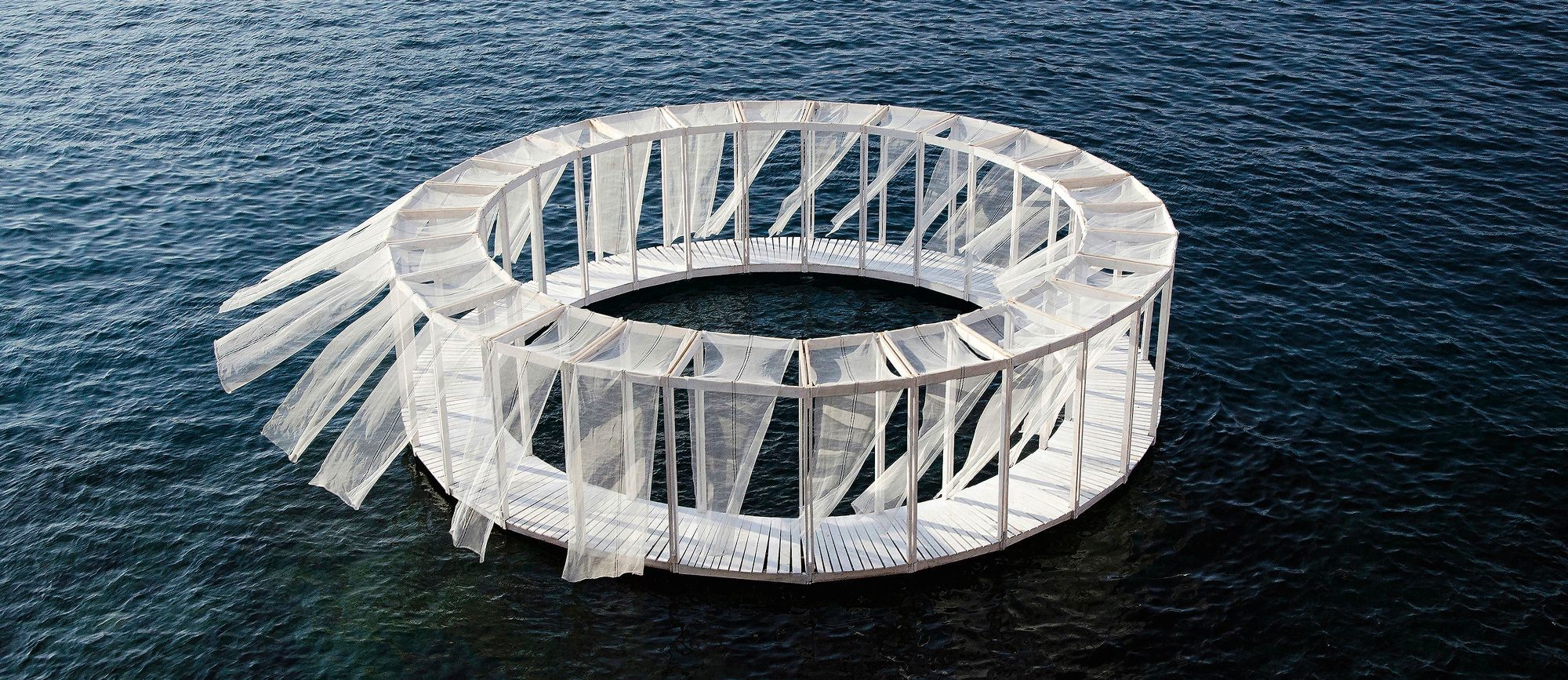
Image: Antiroom II, by Ahmad El Mad, Elena Chiavi and Matteo Goldoni | Image source: arquitecturaviva.com
The sea, and the liquid element in general, was and still is the most important part of the earth. It’s no coincidence, after all, that our planet is characterized as the "wet planet" since 71% of its surface is covered with water. Moreover, thanks to the importance of sea lanes, various civilizations developed or were built from the start, leading societies to economic, political, and cultural prosperity, which in turn initiated the "global community." However, due to the general climate change observed in recent years, the sea is increasingly marginalized, polluted or considered a given source of income and entertainment in modern societies.
Neglect, exploitation and infection
Anyone could understand the meaning of the above words in relation to the sea, if we consider the tons of garbage washed up on the shores around the planet in the last - admittedly many - years. A typical example of the tons of plastic that end up where they started in the first place, that is, on the coast, are the beaches in the Philippines. According to information from the SEA circular organization, every year around 0.28 to 0.75 tons of plastic enters the seas, only from the port of Manila, contaminating water resources and leading to the death of a major part of the marine fauna.

Image source: terracycle.com
The impact of this phenomenon is of vital importance for everyone, as the seabed is connected to other parts of the ecosystem by recycling and feeding the organisms of the ocean habitats for over a billion years. Thus, if this chain of functions of the oceans is cracked, the substances produced at the bottom, such as nitrogen, will be reduced, thus endangering the life of sea organisms.
However, the causes behind the pollution and neglect of the waters are not only found in the ruinous tons of plastic but are also found in the growing fisheries, and in particular in the use of fishing trawlers. In 2019, the Food and Agriculture Organization of the USA sounded the alarm, saying that there are around 4.6 million fishing vessels in the seas, while the number of bottom trawlers is increasing dramatically. A typical example is the Adriatic region, where half of the boats used are of this type. In addition to the USA, similar announcements and efforts to reduce reckless fishing practices are made by the European Union, introducing the European Maritime and Fisheries Fund. As we read on the official website of the European Council: "The European Maritime and Fisheries Fund (EMFF) is a European funding program that supports fisheries policy, inland fishing, aquaculture and the maritime sector."
But despite organized efforts and warnings, the problem remains and plagues both the scientific community and life within societies. But would we respect the sea if we looked back, to the meaning it gave to various areas of life over time?
Human evolution as a "product" of the sea
As David Helvarg, journalist and activist, says about the oceans "More is known about the dark side of the moon than is known about the depths of the oceans", we know very little about the sea, and consequently about the planet. However, although most people’s knowledge about the sea is limited, it is still part of the lives of millions of people, who depend not only financially on it, but also culturally or socially.
As we are called to notice the importance of water over time, we begin to realize that it has influenced the course of world history. Prehistoric population movements depended on waterways, as these were considered the safest route to settling some place else. An example of such movements that affected the habitation of the Earth, was the passing of people through the Bering Strait. With the homonymous sea’s level plummeting, large numbers of people moved from Asia to Alaska at the end of the last ice age, settling on the continent. Thus, with a careful analysis of the above example, we understand that the observation of the behaviour of the sea by man enabled him to evolve and move towards the future. And this development does not stop there, since gradually over the centuries the large urban centres are oriented towards the liquid element. Floating rivers and seaports became the setting for the greatest civilizations, while attempts to access the sea, for commercial reasons, would become the occasion for wars, most recently the so-called "cod war" in the English Channel between Great Britain and France, in order to define the fishery borders.
Travelling from antiquity, when trade was mostly maritime, to the Middle Ages, we will find more and more civilizations flourishing by the sea. From Constantinople to Venice - also known as the "City of Water" - to the rule of the great empires of Spain, Portugal and Great Britain by sea voyages, the sea was the means of influence and conquest of many countries, while giving the colonies economic and social power. Today, China is a similar force, possessing a global network of commercial ports.
But it would be naive to dwell only on the economic and social impact of water on society. The sea has inspired, over the centuries, the arts and culture. From Robinson Crusoe, Moby Dick, J. M. W. Turner's sea landscapes and Godard's "A Story of Water" or Guillermo del Toro's "The Shape of Water", water is ubiquitous, defining memory, spreading legends and building stories.

Image source: assets.fontsinuse.com
But how did water affect the field of architecture and design? And most importantly, can we use water as a means to achieve sustainability?
Architecture, memory and culture
Obviously, the influence of water on people’s way of life holds an important part in the collective memory of societies. The sea has always been a place which man built on or oriented towards his house, either for practical reasons or for reasons of prestige and aesthetics. We must not forget, after all, that a house by the sea in many societies is considered synonymous with luxury.
This inextricable link between home and the sea was underlined by Aldo Rossi, when he visited Samos, in the summer of 1989. This visit amounted to a design by the architect that depicts what he saw: the interior of his room, a bottle and the sea. It is no coincidence, of course, that the Italian architect incorporates the liquid element in this sketch. From the villa on Lake Maggiore to Il Teatro del Mondo and the trip to Samos, water will always be part of his work. Maybe because water for him symbolizes infinity, a perpetual motion in space and time, or maybe it reflects the Nietzschean concept of the eternal return. Moreover, for the spectators of this "scene" overlooking the blue, water is not just a means of returning to eternity. Paralleling the landscape in the background of the sketch with the villa on the Italian lake, each spectator-tenant is confronted not only with the place but also with the time, which, although eternal, remains constant, unchanged. It is simply a reminder of a past memory, which, although fleeting, still exists and affects us.
Of course, this "reminder of the sea-connected past" is also found in the way architectural compositions and designs were developed. A typical example of a house, directly related to the sea, can be found in Indian stilt houses. These elevated bamboo constructions, located in coastal areas, offer the tenants the ideal, so to speak, safe living conditions, since the empty space, just below the main construction, helps to avoid flooding of the interior, if the level of the nearby sea rises. In addition, the use of this wood, according to the tenants, offers flexibility and durability, while it also constitutes a cheap and easy solution material-wise. The most important thing, however, is its sustainability, since it is a natural product, the processing and destruction of which does not pose an immediate threat to the environment.

Wat Hong Thong Temple, Thailand | Image source: commons.wikimedia.org
Obviously, the type of these constructions was not restricted to the traditional, anonymous architectural tradition of many areas around the world. It is not uncommon for large, exotic, hotel complexes to borrow this type for the construction of idyllic resorts, while architectural firms also adopt this particular construction method, taking into account the sea level rise, a phenomenon inextricably linked to climate change.
However, apart from the above practices, which focus more on the management of the issue, the need to start discussions at a central and institutional level is equally urgent. The example of Australia could be considered exemplary, with the authorities placing a different filter system at the ends of the sewer pipes.

Image source: sustainability.owu.edu
This seemingly giant net is capable of holding all the waste before it reaches the phreatic zone, where it would be far more difficult to collect and locate. However, its positives are not limited here, since, with its emptying, the objects are separated, in order to be recycled or reused.
Changing through the sea
Already aware that around 136 cities are at risk due to rising sea levels, many architectural firms have begun to move towards a new way of planning, which, aiming at sustainability, raises the question of how we should eventually inhabit cities. In this way, the goal of everyone will be urban development, in which the water landscape and its smooth integration into it will play a key role. Such efforts have begun in Southeast Asian countries, which have to deal with both the problem of rapid population growth and housing as well as the effects of climate change.
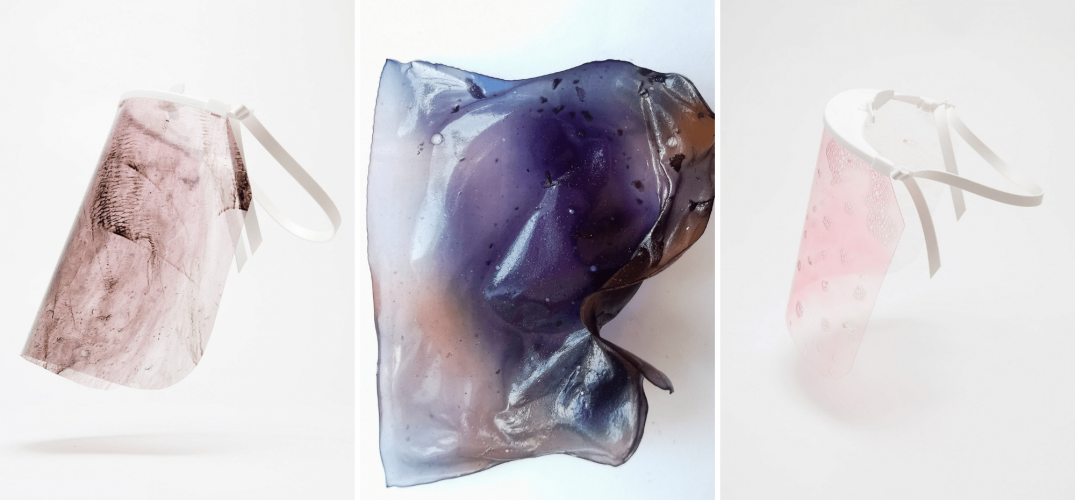
The same approach is followed in the field of design. Taking advantage of materials found on the shores or trapped in nets, many designers are reshaping them, perhaps reaching the dream of Rossi's continuous present-past, showing that everything can be brought back to life and functionality. So this thorough study of water -and the history that it is capable of constructing- is also found in the projects of many studios. A typical example of a research based design studio, in which water plays a central role, is the one developed in collaboration with Nichi Barratto and Yianni Mourava. In the work of the two artists, archaeology interacts with the creation of fantastic landscapes, water, history and all kinds of artistic expression.

Image source: scandinaviandesign.com
Everyone wishes for these initiatives to increase, and through coordinated institutional and private actions to adapt our way of life to the impending change, which, unfortunately, is ahead of us. Respect for the sea may be the last resort for the gradual improvement of global warming. If it does not succeed, the highly imaginative project of the LADbible Group, The Trash Isles - a hypothetical island state formed by garbage - may not remain only on paper.

The passport of The Trash Isles | Image source: dalandmike.com
So, the final question that arises is whether this island's passport will really be useful to us in the future.
Sources/ Further reading
C. Carson (2017). CLOUD FORMATIONS: CLIMATE CHANGE, DIASPORA THEORY, AND THE INTERNET. From: https://pinupmagazine.org/articles/cloud-formations-climate-change-diaspora-theory-and-the-internet#14.
M. Williams and J. Zalasiewicz (2020). Forest Gardens Beneath the Anthropocene Seas. From: https://www.e-flux.com/architecture/oceans/331875/forest-gardens-beneath-the-anthropocene-seas/.
V. Moschetti (2021). THIS BLUE LOVE: ALDO ROSSI IN SAMOS IN LATE SUMMER 1989. From: https://drawingmatter.org/this-blue-love-aldo-rossi-in-samos-in-late-summer-1989/.
J. R. Gillis (2013). The Blue Humanities. From: https://www.neh.gov/humanities/2013/mayjune/feature/the-blue-humanities.
L. M.Abadie, L. P.Jackson, E. Sainz de Murieta, S. Jevrejeva, I. Galarraga (2020). Comparing urban coastal flood risk in 136 cities under two alternative sea-level projections: RCP 8.5 and an expert opinion-based high-end scenario. From: https://www.sciencedirect.com/science/article/pii/S0964569120301599
N. Naha (2021). What is stilt house in India and how is it made?. From:https://www.magicbricks.com/blog/stilt-house/125146.html.
Οι πρώτοι κάτοικοι της Αμερικής (2021). from: https://www.archaiologia.gr/blog/2011/09/28/%CE%BF%CE%B9-%CF%80%CF%81%CF%8E%CF%84%CE%BF%CE%B9-%CE%BA%CE%AC%CF%84%CE%BF%CE%B9%CE%BA%CE%BF%CE%B9-%CF%84%CE%B7%CF%82-%CE%B1%CE%BC%CE%B5%CF%81%CE%B9%CE%BA%CE%AE%CF%82/.
A. D. Steffen (2019). Australia Came Up With A Way To Save The Oceans From Plastic Pollution And Garbage. Από: https://www.intelligentliving.co/australia-plastic-ocean/ .
Information for managing fishery in the EU., in: https://www.europarl.europa.eu/factsheets/el/sheet/115/%CE%B4%CE%B9%CE%B1%CF%87%CE%B5%CE%B9%CF%81%CE%B9%CF%83%CE%B7-%CF%84%CE%B7%CF%82-%CE%B1%CE%BB%CE%B9%CE%B5%CE%B9%CE%B1%CF%82-%CF%83%CF%84%CE%B7%CE%BD-%CE%B5%CE%B5.
Information for SEA circular, στο: https://www.sea-circular.org/.
Information for το The Trash Isles, στο: https://www.ladbiblegroup.com/casestudy/trash-isles/.