Το Loopo Studio μας μιλά για την εικονογράφηση και την αφήγηση στην αρχιτεκτονική και γραφιστική σύνθεση
DS.WRITER:
Vasilis Xifaras
Ζωηρό, πολυεπίπεδο, δραστήριο. Το Loopo Studio, ένα δημιουργικό γραφείο με έδρα τη Θεσσαλονίκη, είναι αυτά και πολλά ακόμη. Με έργα που κινούνται μεταξύ αρχιτεκτονικού και γραφιστικού σχεδιασμού, το studio μετρά ήδη 10 χρόνια λειτουργίας. Τα project της ομάδας περιλαμβάνουν αφίσες για εκδηλώσεις και εκθέσεις, καταλόγους, zines, λογοτεχνικές εκδόσεις αλλά και αρχιτεκτονικό σχεδιασμό. Για τις εργασίες γραφιστικού σχεδιασμού, η ομάδα χρησιμοποιεί ως εργαλεία το κείμενο, την εικονογράφηση και συχνά τη φωτογραφία, σε μια διαδικασία σχεδιαστικής σύνθεσης που υπηρετεί την ιδέα ότι ο σχεδιασμός είναι ένα μέσο για να αφηγηθούμε μία ιστορία. Τα αρχιτεκτονικά έργα, από την άλλη, αφορούν interior design καταστημάτων αλλά και ανακαινίσεις/αποκαταστάσεις κατοικιών, καθώς και συμμετοχές σε ανοιχτούς διαγωνισμούς.
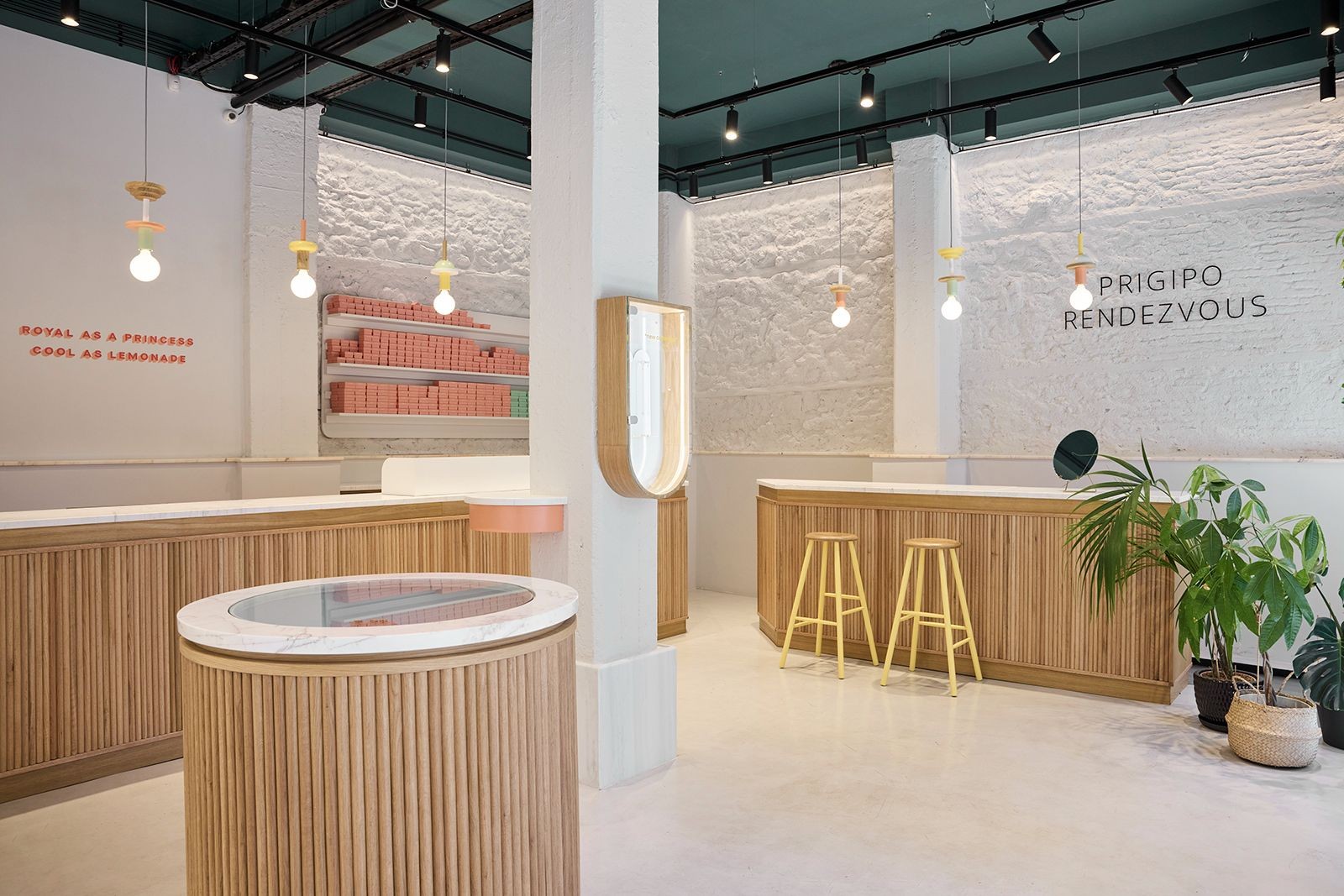
Όσον αφορά τη γραφιστική, ξεχωρίζουμε τον σχεδιασμό τής οπτικής ταυτότητας του Πικ Νικ Urban Festival 2019, που βασίζεται στις τυπογραφικές και χειρόγραφες φράσεις, στη γραμμική εικονογράφηση αντικειμένων που έχουμε μαζί μας στο πικνίκ, καθώς και σε μία μικρή φωτογραφία της Ρωμαϊκής Αγοράς, όπου λαμβάνει χώρα το φεστιβάλ. Στην αρχιτεκτονική, αναμφίβολα μας κέντρισε το ενδιαφέρον το Prigipo, ένα κατάστημα κοσμημάτων στην Αθήνα, όπου οι minimal γραμμές και τα γήινα χρώματα αποδίδουν στον χώρο μια αέρινη αισθητική. Έτσι, ζητήσαμε από την ομάδα του Loopo Studio να μας πουν περισσότερα για το design τους και τη φιλοσοφία πίσω από τα έργα τους.
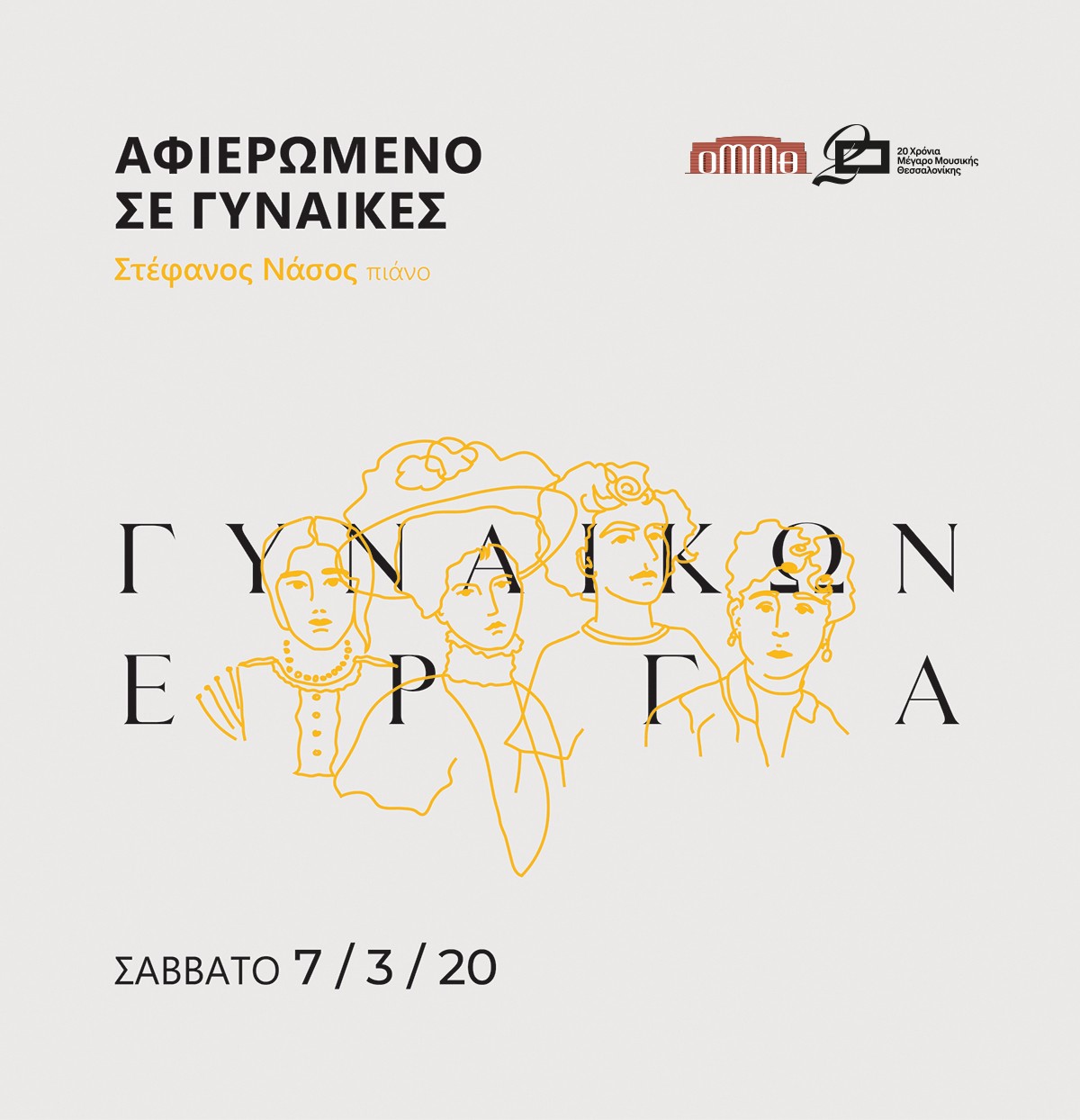
Εικονογράφηση και σχεδιασμός αφίσας & προγράμματος για σειρά εκδηλώσεων, υπό τον γενικό τίτλο "Γυναικών έργα". Μέγαρο Μουσικής Θεσσαλονίκης, Μάρτιος 2020
Στον σχεδιασμό του Prigipo κυριαρχούν οι κομψές χειροποίητες ξύλινες επιφάνειες, κάτι που επιλέγετε και σε άλλα αρχιτεκτονικά project. Τι προσφέρει το ξύλο στο σχεδιαστικό σας λεξιλόγιο; H προτίμησή σας στο χειροποίητο, που φαίνεται και στα γραφιστικά που σχεδιάζετε, πώς προέκυψε;
Μια ιδέα που μας ενδιαφέρει είναι η σωματική εμπλοκή στη σχεδιαστική διαδικασία. Το σώμα, όπως και το κομμάτι των λογικών διεργασιών (σκέψη, λόγος), είναι ένα μέσο έκφρασης, το οποίο επίσης εξασκεί τα αντανακλαστικά του και μπορεί να προσθέσει ποιότητες. Για παράδειγμα, μπορεί να εμπλουτίσει την αντίληψή μας σχετικά με τα υλικά. Μπορεί να προσθέσει στη σχεδιαστική διαδικασία αντιδράσεις που δεν θα μπορούσαμε να προβλέψουμε μόνο με τη σκέψη. Ταυτόχρονα, συνδυάζοντάς το με την κατασκευή ή με τον αναλογικό σχεδιασμό, μπορεί να αντιληφθεί ίσως καλύτερα την έννοια της κλίμακας. Τέλος, εξισώνει και ταυτοποιεί τις έννοιες των thinkers & doers, με στόχο μία λιγότερο ιεραρχημένη πρόσληψη της σχεδιαστικής διαδικασίας.
Πιο συγκεκριμένα για το ξύλο, αλλά και για όλα τα φυσικά υλικά, όπως το μάρμαρο, πιστεύουμε αρχικά ότι προσθέτει τη διάσταση του χρόνου. Τα υλικά αυτά γερνούν όμορφα καθότι φυσικά. Επιπλέον, εντάσσεται με οργανικό τρόπο στον σχεδιασμό η κλίμακα της κατασκευαστικής λεπτομέρειας. Πίσω από τα υλικά αυτά, υπάρχει ένα δίκτυο μικρότερων εργαστηρίων με βαθιά γνώση των υλικών και των τεχνοτροπιών, που εμπλουτίζουν σημαντικά το δικό μας σχεδιαστικό αποτέλεσμα.
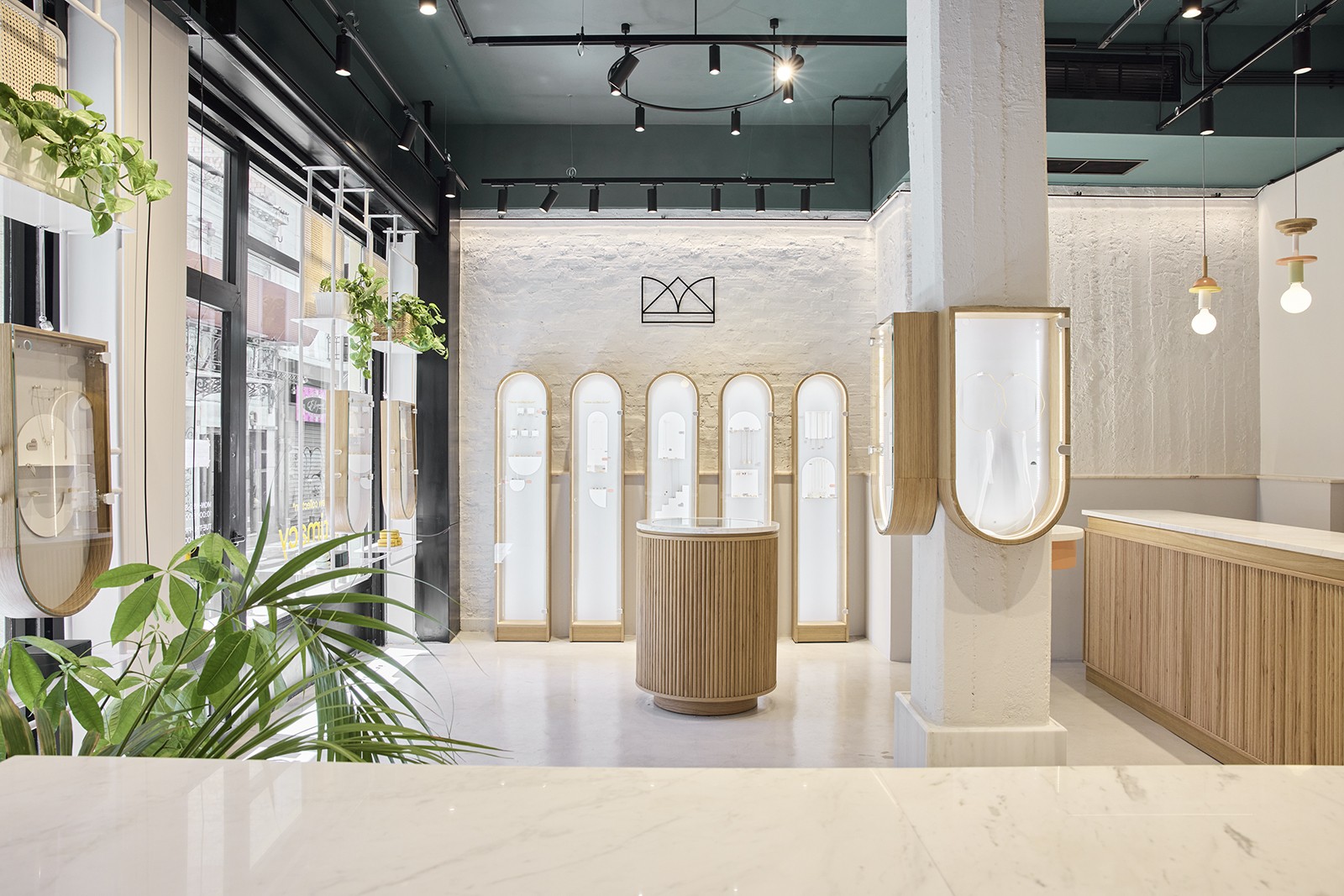
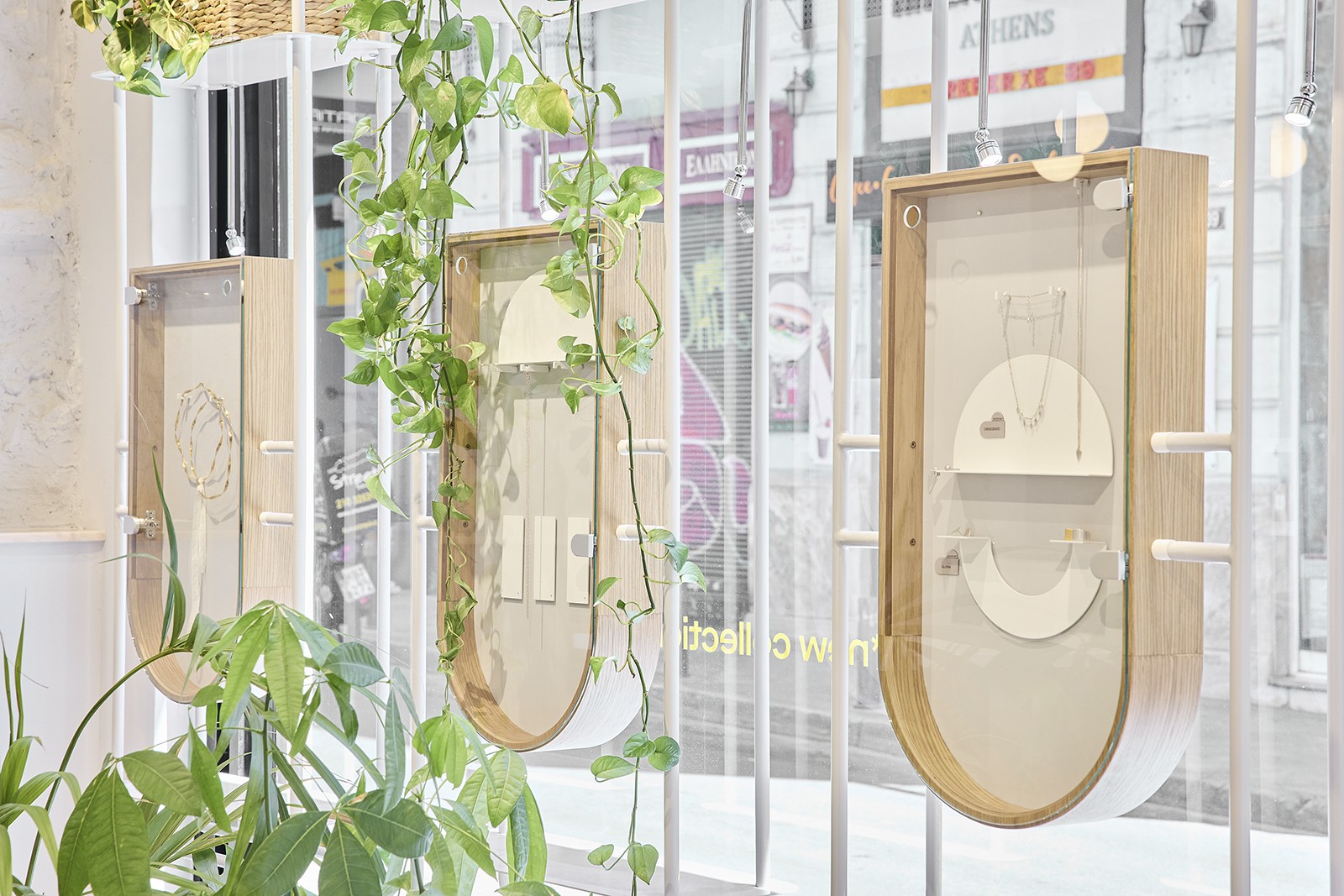
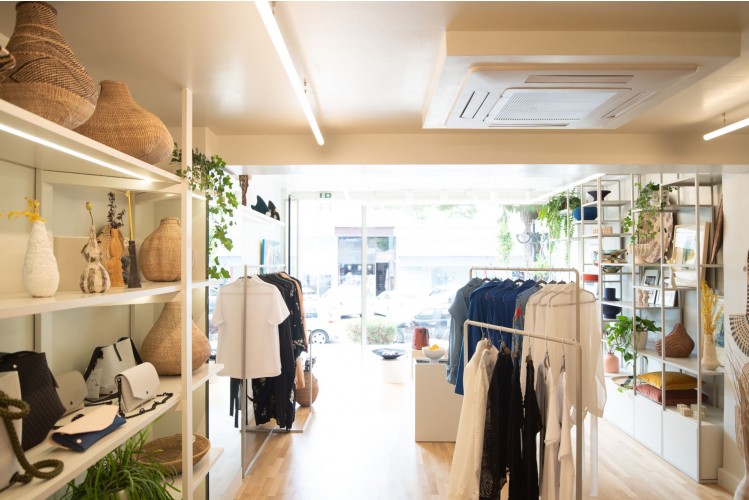
Prigipo. Σχεδιασμός καταστήματος κοσμημάτων στην Αθήνα, 2021
Για τον σχεδιασμό οπτικής ταυτότητας, φαίνεται ότι συνδυάζετε ψηφιακά εργαλεία επεξεργασίας με το «παραδοσιακό» γραμμικό σχέδιο. Πώς καταλήξατε σε αυτή τη δημιουργική γλώσσα;
Ένα μέσο που η ομάδα μας έχει εξασκήσει και έχει εντάξει στη σχεδιαστική μας εργαλειοθήκη, είναι η εικονογράφηση. Συγκεκριμένα, ξεκινώντας από σχεδιαστικές καταγραφές απλών στοιχείων ή αντικειμένων που υπάρχουν γύρω μας, αρχικά με πενάκι σε χαρτί, με μια πρόθεση απλή, κυριολεκτική και όχι σχολιαστική, ο τρόπος αυτός συχνά περνάει από τα ψηφιακά σχεδιαστικά μέσα για να ενσωματωθεί λειτουργικά σε εφαρμογές του γραφιστικού σχεδιασμού. Μπορεί να θυμίζει το «παραδοσιακό» γραμμικό σχέδιο, αλλά στην πραγματικότητα δεν αφορμάται τόσο από εκεί, όσο από την επιθυμία να υπάρξει στη σύνθεση μια εικονογραφική «σημείωση», κάτι που σχεδόν θα μπορούσε να αντικατασταθεί από μία λέξη. Ταυτόχρονα, η αισθητική της χειροποίητης γραμμής μάς δίνει ένα ακόμη υλικό, μια ποιότητα για να προσθέσουμε στην τυπογραφία τη φωτογραφία και να χτίσουμε τη σύνθεσή μας.
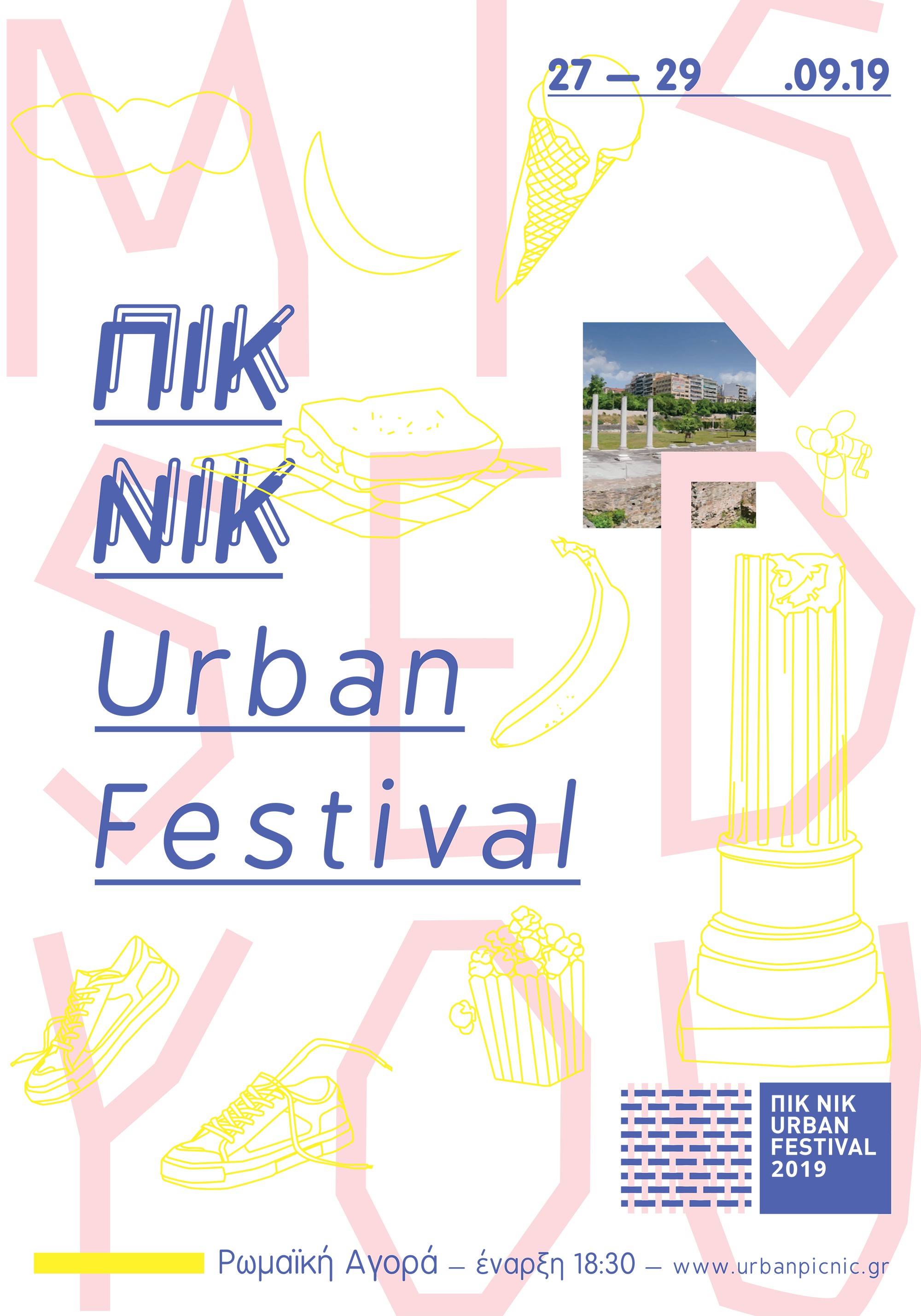
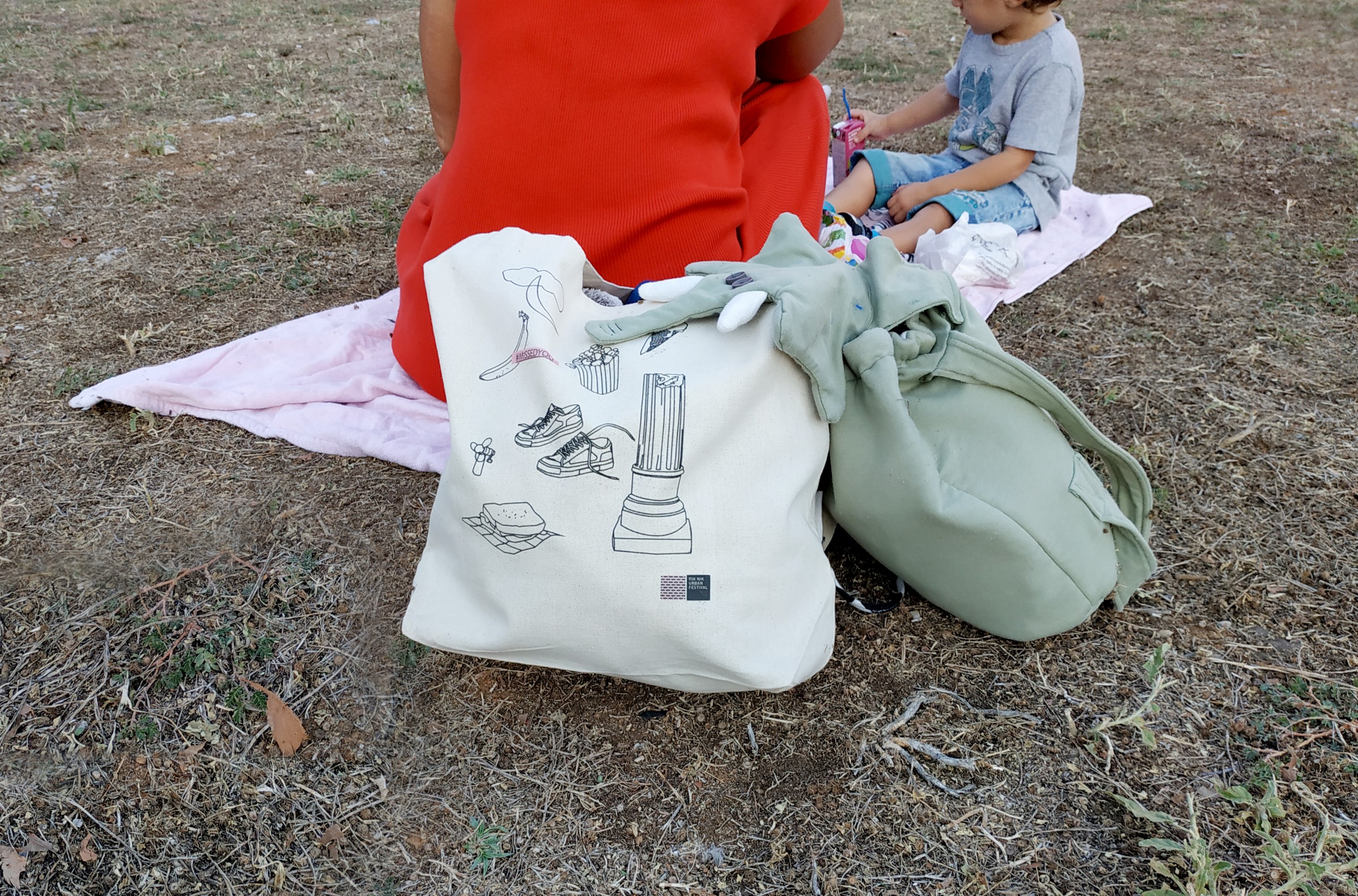
Σχεδιασμός οπτικής ταυτότητας του PIK NIK Urban Festival 2019. Θεσσαλονίκη, Σεπτέμβριος 2019
Φαίνεται ότι σε κάθε έργο σας δεν ξεχωρίζει η αισθητική ματιά τού ενός από του άλλου. Πώς έχετε καταφέρει να δουλεύετε ομαδικά;
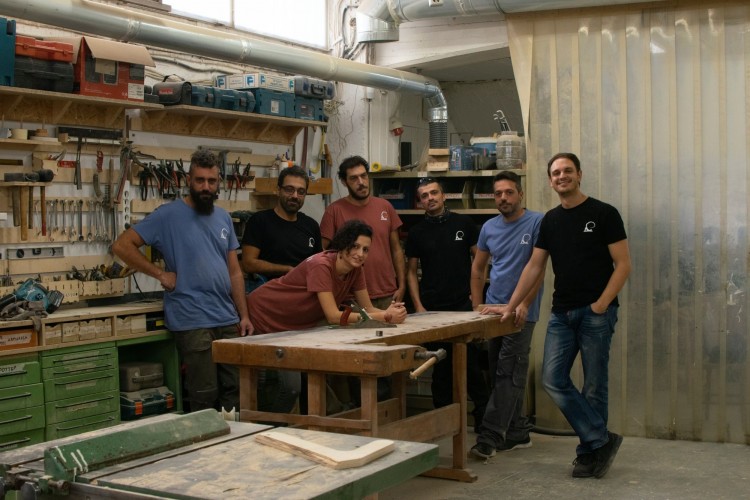
Το γραφείο μας λειτουργεί σαν ένα σύνολο από designers. Το κοινό ακαδημαϊκό στοιχείο όλων είναι οι σπουδές στην αρχιτεκτονική σχολή. Από εκεί και πέρα όμως διαφέρουν, όπως είναι φυσικό, οι αναφορές μας, οι τρόποι, τα αντανακλαστικά, αλλά και -πιο πρακτικά- ο τομέας στον οποίο το κάθε μέλος επικεντρώνει την έρευνά του μέσα στο πεδίο του σχεδιασμού, αρχιτεκτονικού ή γραφιστικού. Ωστόσο, μέσα από τη συνύπαρξή μας στον ίδιο χώρο και στα ίδια projects, μεγαλώνουμε μαζί και συνδιαμορφώνουμε το σχεδιαστικό μας λεξιλόγιο. Ενυπάρχουν οι ατομικές γραφές που συνδιαλέγονται μεταξύ τους, άλλοτε περισσότερο και άλλοτε λιγότερο. Οι εργασίες που αναλαμβάνει το γραφείο μπορεί να δουλεύονται από ένα άτομο ή έως τέσσερα άτομα, ανάλογα με τις ανάγκες.
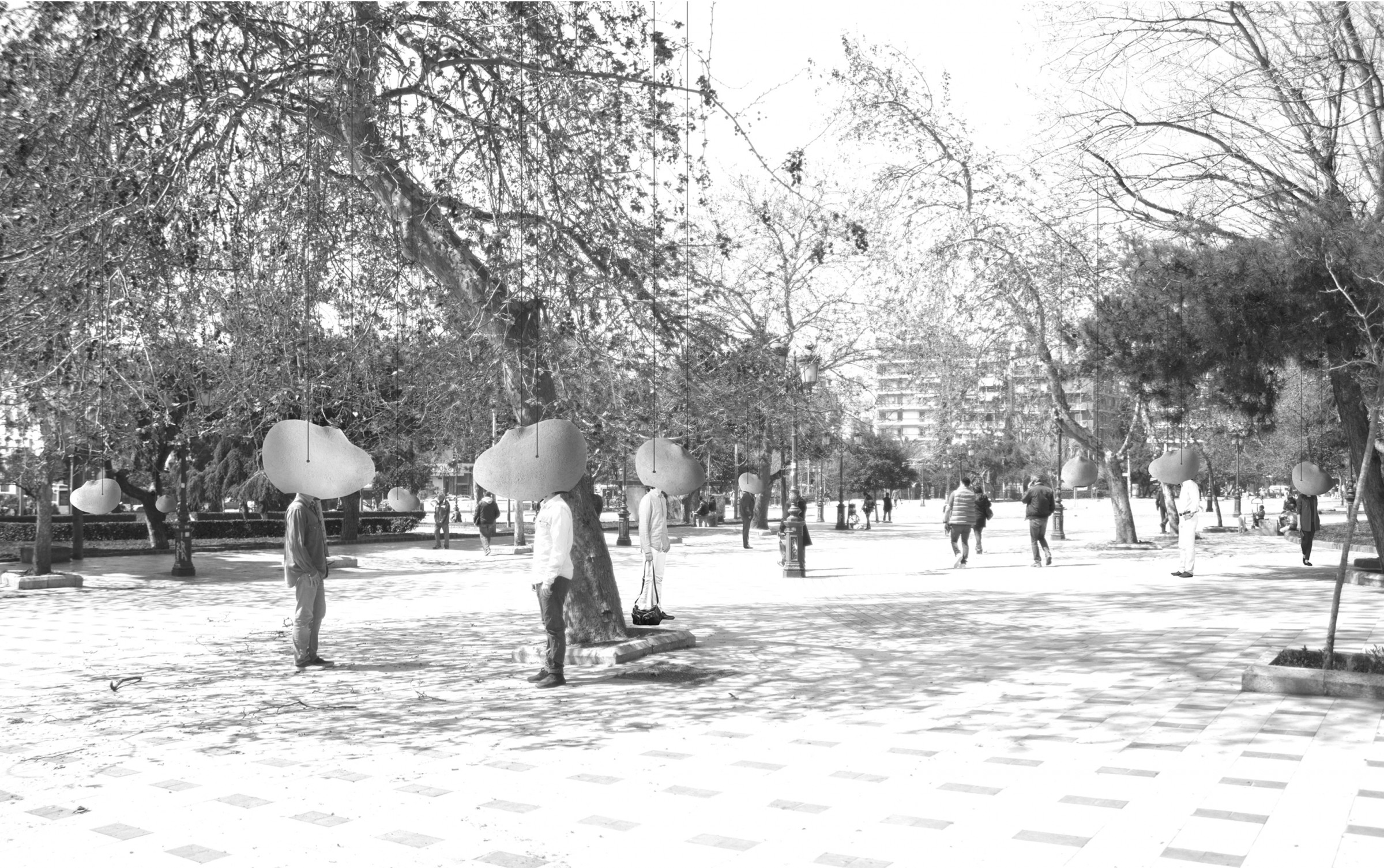
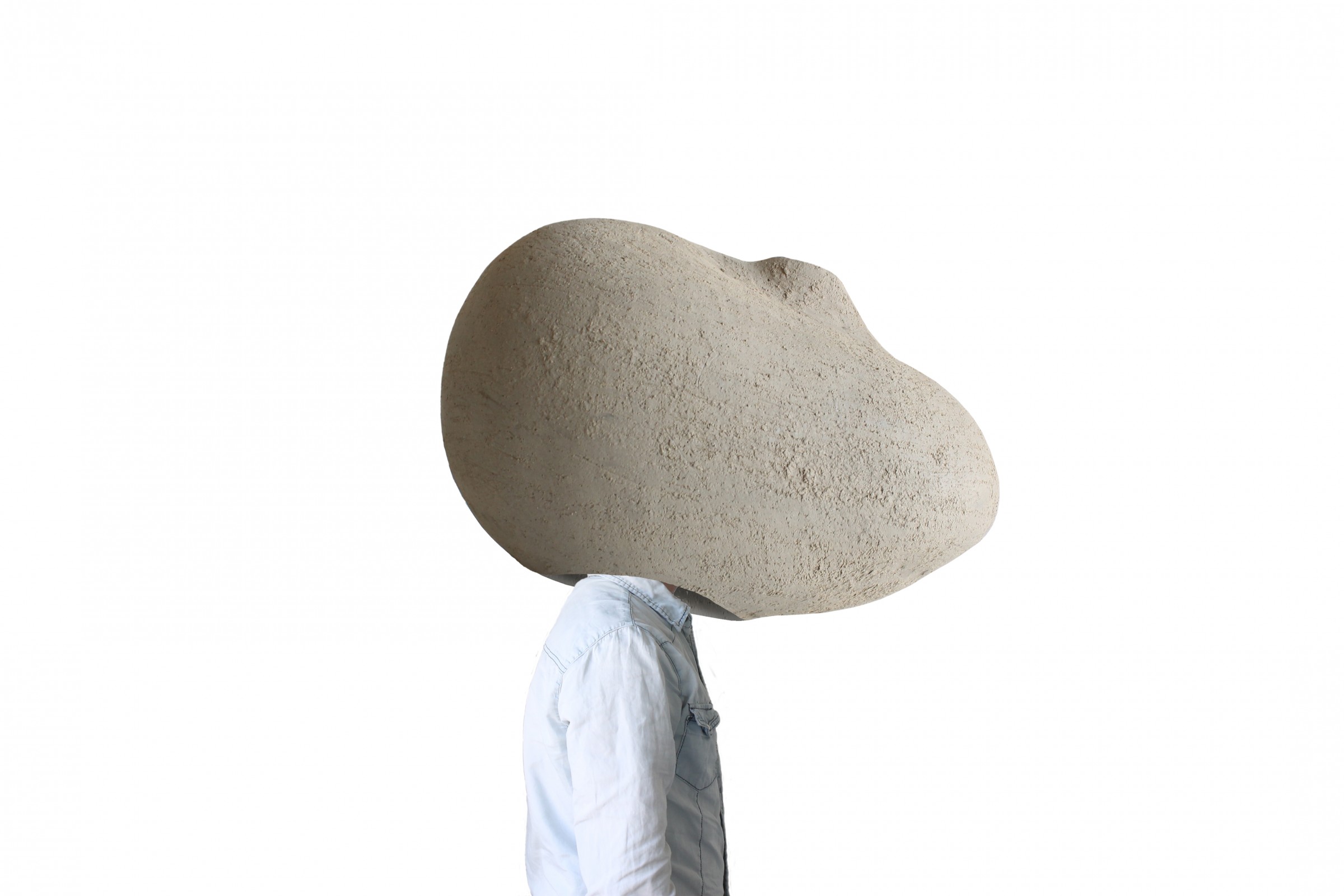
Διακριθείσα συμμετοχή στον αρχιτεκτονικό διαγωνισμό COCOON Competition. Greek Institute of Architects in New York [GIANY], 2016
Δεν είναι σύνηθες στην Ελλάδα ένα δημιουργικό γραφείο να είναι τόσο δραστήριο και εξωστρεφές. Ποιος είναι για εσάς ο ρόλος μιας δημιουργικής ομάδας σε σχέση με την κοινωνία, και τι στοχεύετε μέσα από δράσεις σαν το Loopo Kiosk;
Πιστεύουμε ότι ο σχεδιασμός είναι μια γλώσσα επικοινωνίας. Επίσης πιστεύουμε ότι η εργασιακή πραγματικότητα εμπεριέχει -περισσότερο ή λιγότερο- σημεία σκληρότητας, που για όλ@ είναι πιο χρήσιμο να λειανθούν. Η πόλη είναι το πεδίο μέσα στο οποίο δημιουργούμε, εργαζόμαστε και διεκδικούμε, και άρα μας φαίνεται σημαντικό να έχουμε επαφή, να ακούμε αλλά και να δείχνουμε τι ακριβώς είναι αυτό που κάνουμε στη δουλειά μας. Το studio μας είναι το πεδίο όπου διερευνούμε τα όρια του σχεδιασμού σαν δημιουργική διαδικασία αλλά και σαν εργασία. Βρίσκουμε χρήσιμο και συχνά ενδυναμωτικό να γνωριζόμαστε με άλλα δημιουργικά άτομα ή ομάδες, ειδικά όταν βρισκόμαστε σε έναν τόσο μικρό τόπο, όπου αυτό είναι πραγματικά εφικτό. Το Loopo Kiosk καθιερώθηκε όταν μετακομίσαμε σε ένα όμορφο ισόγειο στην Πλάτωνος. Είναι ένα pop-up shop που λειτουργεί κάθε Πέμπτη και εκεί μπορείς να βρεις τυπώματα, χάρτινες κατασκευές και σχεδιαστικά έργα από μέλη του Loopo. Η σχεδιαστική μας δουλειά μπορεί να είναι αρκετά μοναχική και να μας κρατάει για αρκετές ώρες μπροστά στα σχεδιαστικά εργαλεία, και έτσι αυτός είναι ένας τρόπος να σπάσουμε λιγάκι αυτή τη ρουτίνα. Επίσης, όμως, μας δίνει τη δυνατότητα να μοιραστούμε απορριφθείσες σχεδιαστικές προτάσεις ή να μπούμε στη διαδικασία να φτιάξουμε νέα έργα για να τροφοδοτήσουμε το shop, τα οποία δεν έχουν πια deadline ούτε συγκεκριμένες απαιτήσεις και έτσι μας βοηθούν να εξασκούμε τ@ εαυτ@ μας ελεύθερα στον σχεδιασμό.
Ευχαριστούμε πολύ όλη την ομάδα του Loopo Studio!