Raising awareness or socially integrating through Design?
DS.WRITER:
Sophia Throuvala
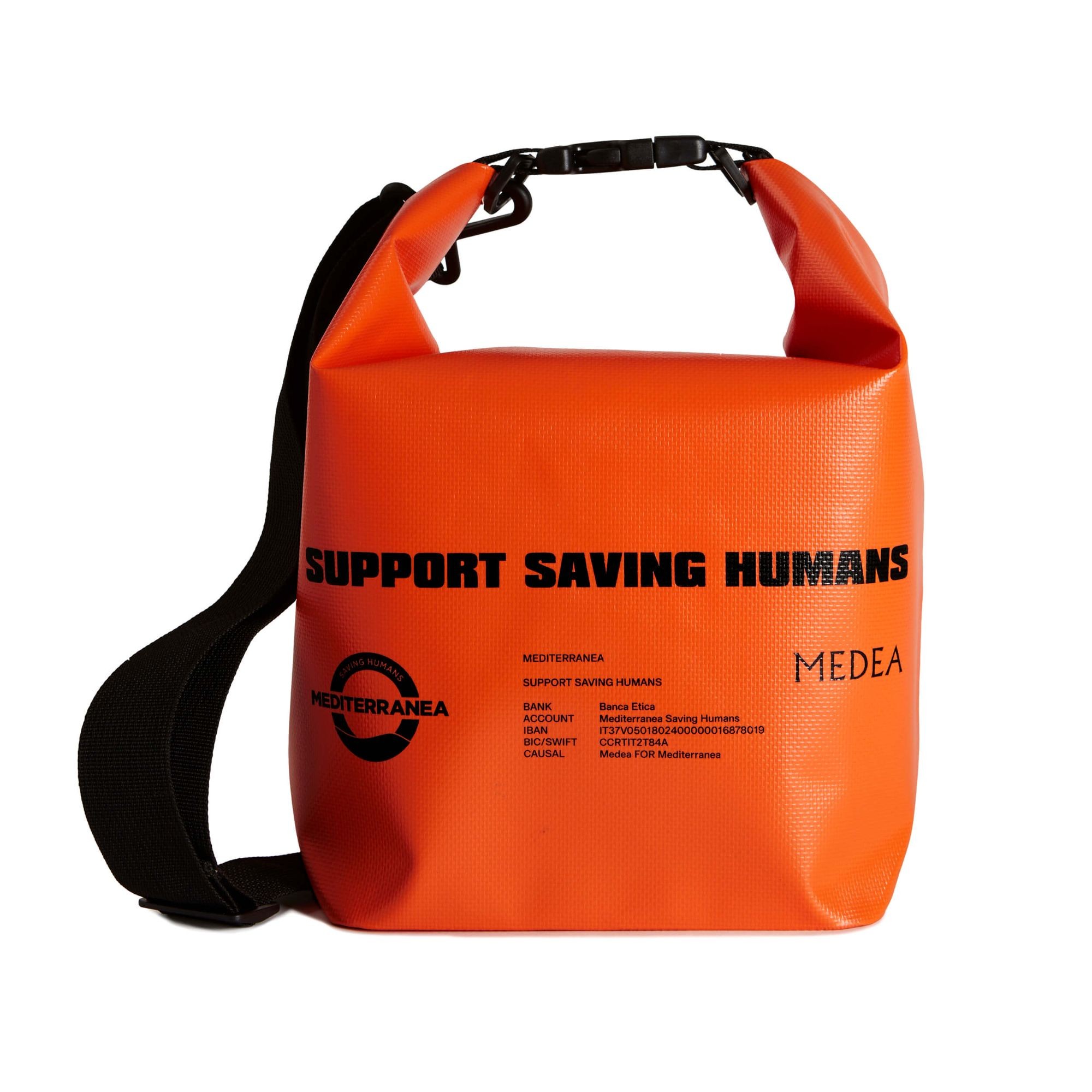
Image Source: medea.world
What is it that potentially makes design both functional and useful? Could functionality not be the practical use of the object but the delivery of a topical message or helping directly people who are in need of support that corresponds to a necessity? Is there a correct way to “send” help or bring to light something that is tragic? This article was occasioned by two, mostly different in nature, projects that belong in the sphere of design. Their common ground is, on one hand, design as a tool for financial aid of migrant populations and on the other hand, an initiative for a humanistic approach regarding the refugee crisis through creation. Here is where Italian Medea FOR Mediterranea and Greek ANKAA Project step in.
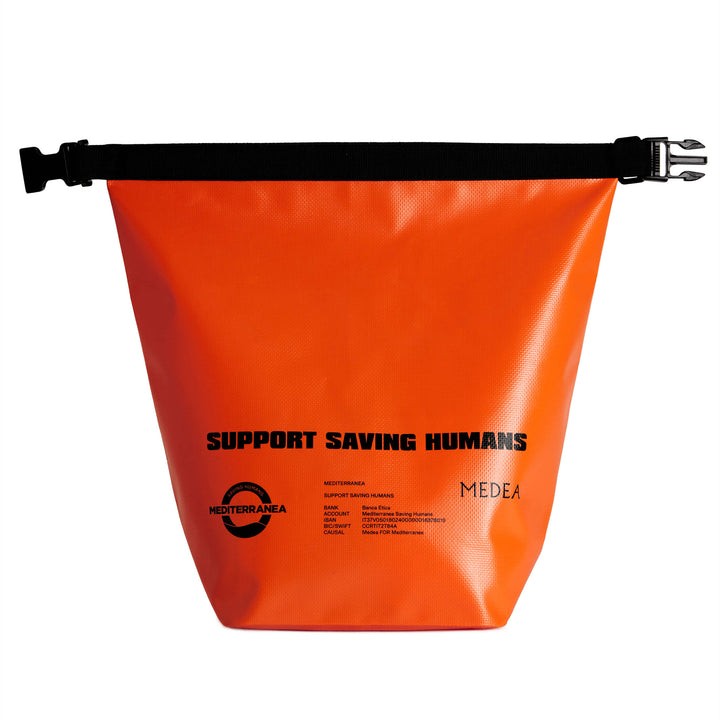
Image Source: medea.world
The brand MEDEA was founded in 2018 by sisters Giulia and Camilla Venturini, aiming at raising awareness and indirectly helping immigrants that are in the Mediterranean. This happened through a collaboration of the brand with the Italian self-managed initiative-mission "Mediterranea Saving Humans" which, after 2014, in the absence of state awareness and action regarding the refugee crisis, created a platform aiming to record and detect individuals who get trapped and/or safely reach the Italian and European coasts hoping for the best. For this purpose, they bought a ship manned by hundreds of volunteers who actively sought to properly inform Italian citizens and at the same time tried to claim the right to rescue and support the incoming waves of refugees.
The project is quite simple and is characterized by the direct communication of the refugee crisis as an event documented in the form of a life-saver/bag. This item, which appropriates pain as an aesthetic, is accepted because it sells for only 50 euros and this total amount is sent directly for financial support to "Mediterranea Saving Humans". Susan Sontag in her iconic book "Regarding the Pain of Others" examines precisely the interaction between topicality and creation. Through a retrospection of images taken from art (mainly painting and photography) the author asks the question: can raw images motivate and representations of the pain of others raise awareness or do they just numb us and, in the process, become normal and, inevitably, forgotten? Looking at this project from this point of view, one can agree that it is a new type of image-capture of pain that, in addition to the charitable work it can perform, can also be as an object as well as the identity of its owner. That is, the owner as a messiah, as a contributor to the "stagnation" of a historical tragedy.
To be a spectator of the disaster that happens in distant places is a basically modern experience, writes the American theorist, and we confirm it. “Wars are now also living room sights and sounds. Information about what is happening elsewhere, called “news”, features conflict and violence” writes Sontag. Her phrase "If it bleeds, it leads" is directly related here to the marketing terms used by the Venturini sisters to create the SOLD OUT bag. The provocative design of this item/accessory speaks the language of today's experience, that is, it invokes emotion and public awareness in a way that the consumer and the organization gain at the same time. The former, with a relatively small cost considering the brand’s prestige, acquires a collector's item and walks with it as an identity, as proof of humanity, while the latter (the organization) is strengthened and proceeds with its actual activism. As Sontag wrote, the normalisation of the atrocity is achieved through its projection and aestheticisation while at the same time the fact (of the atrocity) is confirmed as a news document and/or at the same time as an identity.
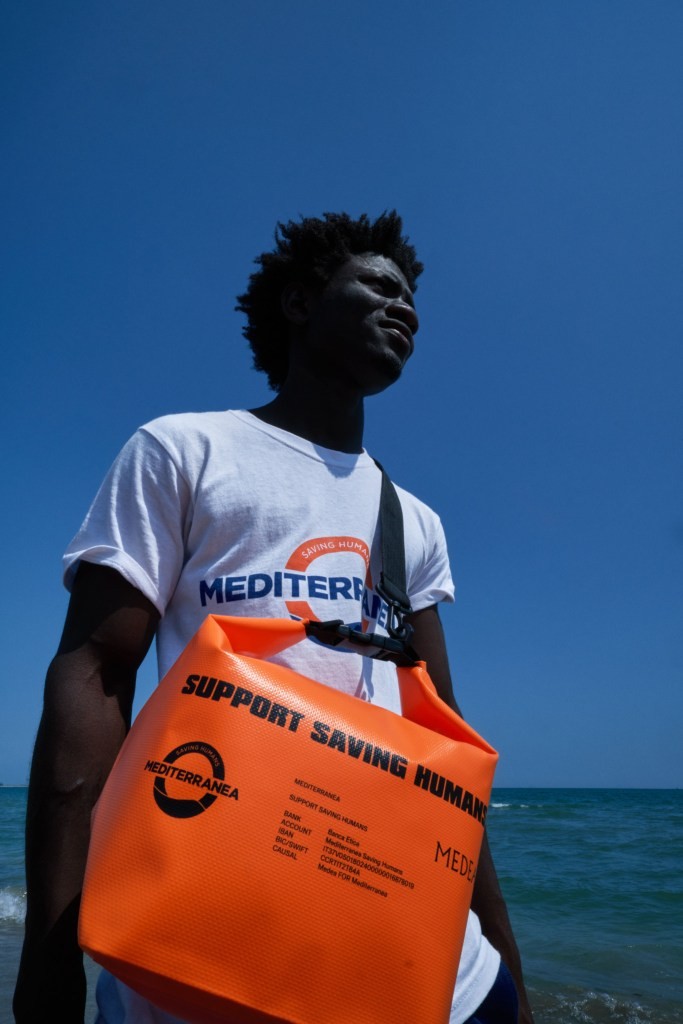
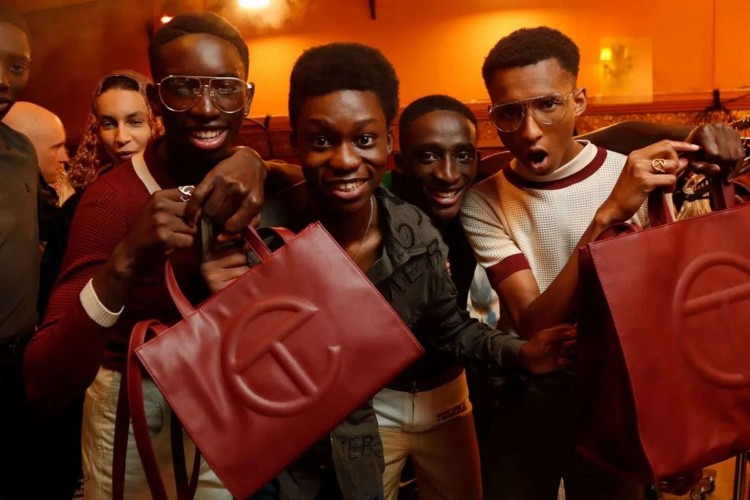
Ibrahima Lo, MEDEA project | Image Source: theglassmagazine.com
The ANKAA Project, on the other hand, is a humanitarian organization that emphasises design in a completely different way from MEDEA. In 2016, the founders of ANKAA played an active part in what we call the refugee crisis by volunteering in the camps of Eidomeni, Chios, Thessaloniki and Athens, organising activities for children, distributing clothes and preparing food for the residents. During the time they spent in the camp of Chios, they decided that they want to provide this help in the long run, that is, as long as it meets the real needs of the community. So, returning to Athens in 2017, they started organising meetings with refugee-related organizations and structures and doing research on how they can establish a creative non-profit environment for the incoming population groups in Athens with the aim of educating, supporting and integrating and, of course, creating through social entrepreneurship.
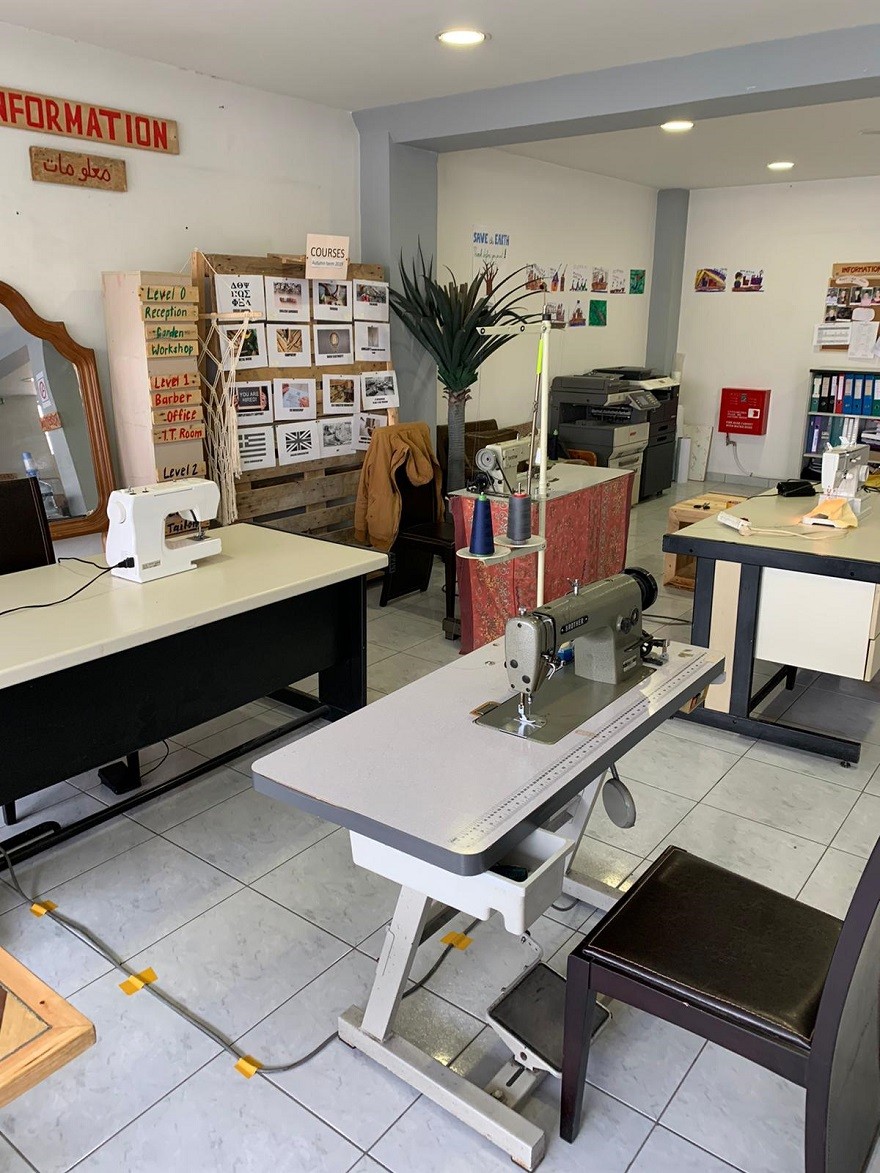
Image Source: athensvoice.gr
ANKAA Project MKO, was founded in Athens in 2018 and then operated mainly with volunteers. Today it is based in Kypseli at 29 Ithaca Street and lists 11 staff members, 5 of whom come from the refugee community. Collectively the team consists of various specialists such as teachers, designers, tailors and others.
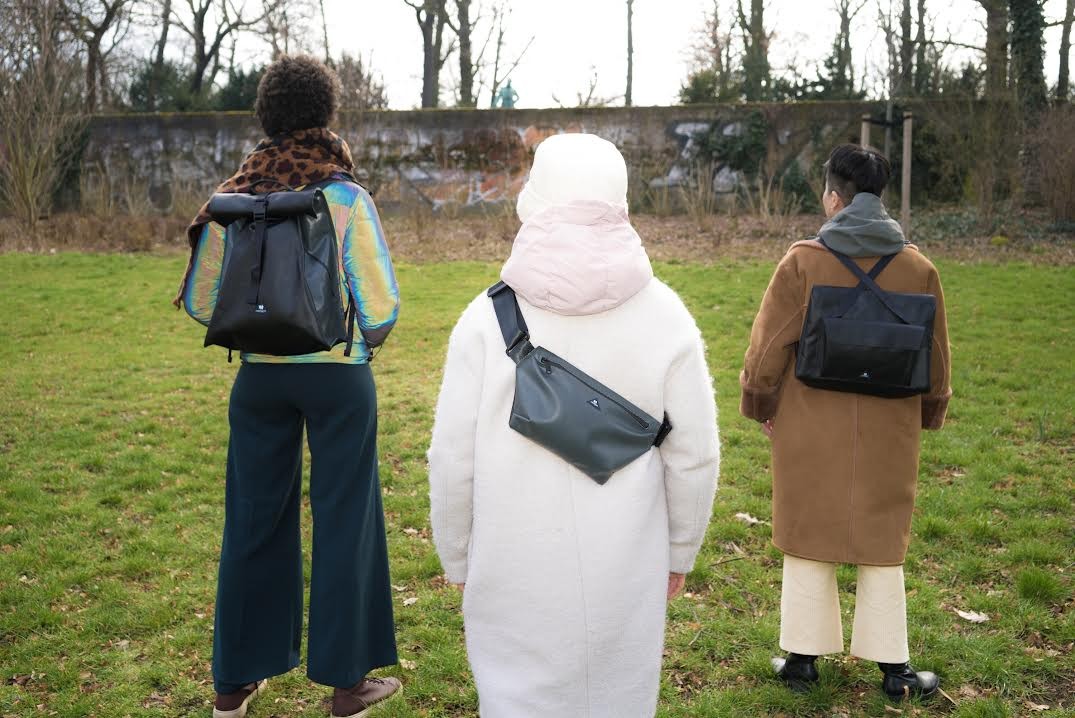
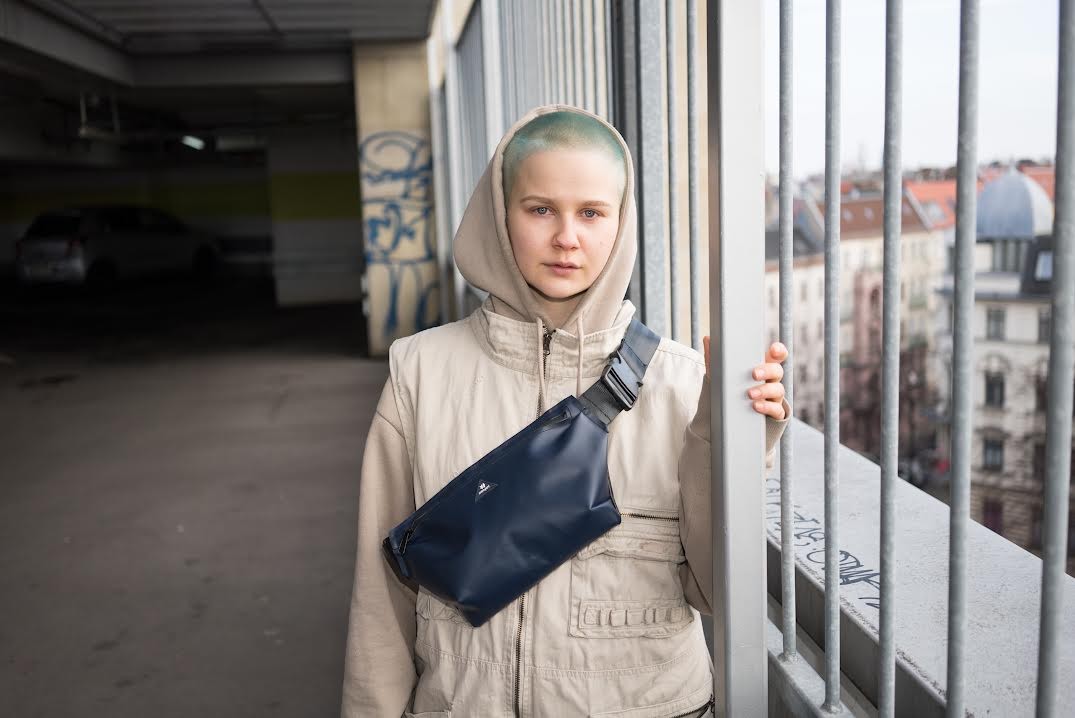
This project offers admirable support regarding the reintegration of incoming populations, making them active and creative. The basic principles of the project are social impact, resilience and zero ecological footprint, equal opportunities, utilization of local materials and recycling, and finally, all of them are part of a continuous welcoming of young people regardless of nationality, gender and religion.
Regarding design, the team has created an online shop with items and accessories made entirely of biodegradable or recycled materials such as torn denim, fabric scraps, wood found in the trash etc. These items are shipped all over Europe and finally, in collaboration with the non-profit Berlin brand "mimycri", they manage and promote a series of bags of different types (wash bags, tote bags, fanny bags, backpacks, laptop sleeves) which are made entirely from the recycling of parts of refugee boats which were washed ashore in Greece, in recent years.
The aforementioned collaboration aims at opening a dialogue and raising awareness about the reality of persecution/uprooting and supporting the refugees through the creation of new job opportunities in the field of design and production. Also, a key element is the ecological awareness and the promotion of a form of design that aims at the creative utilization of the boats that transported the refugees to the coast, as a primary material and a key tool for a dignified reintegration in the creative and social sectors.
.jpg)
AKNAA New Building, 29 Ithakis str, Kypseli
Thus, we are talking about an exemplary and "holistic", so to speak, action plan aimed at the immediate socialization of these people through productive and educational processes which are carried out both by sensitised "locals" and by the refugees themselves who have a say and active participation in the creation and final form of their products. Through the ANKAA Project, everyone acquires the power to control the way in which they will be introduced to the world, without concerning an expanded clientele of patrons. On the contrary, it concerns an act of respect that generates autonomy!
Further reading:
Sontag, Susan, 1933- Regarding the pain of others: https://monoskop.org/images/a/a6/Sontag_Susan_2003_Regarding_the_Pain_of_Others.pdf
https://mediterranearescue.org/
https://www.facebook.com/ANKAAPROJECT/
https://www.rivistastudio.com/medea-mediterranea-saving-humans/
https://medea.world/collections/mediterranea
https://medea.world/products/medea-for-mediterranea
https://fuckingyoung.es/medea-x-mediterranea-support-saving-humans/
https://www.theglassmagazine.com/medea-x-mediterranea-launches-bag-to-help-save-lives/
https://www.ankaaproject.org/shop