



Ο Κώστας Μπίσας πειραματίζεται με αντικείμενα και λειτουργίες με έμπνευση από την καθημερινότητα
DS.WRITER:
Vasilis Xifaras
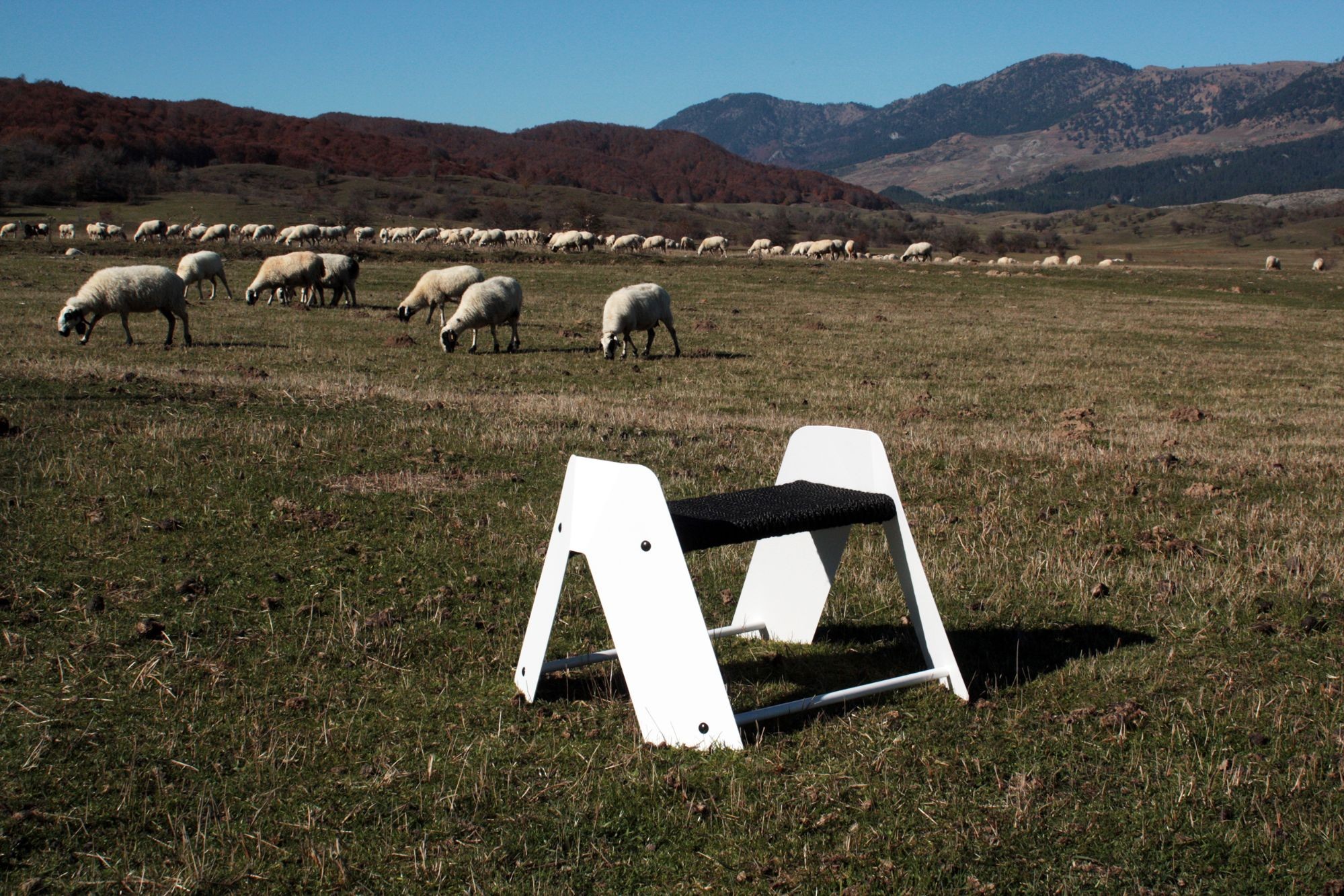
Πηγή Κεντρικής Εικόνας: S.M.RI
Ο Κώστας Μπίσας, industrial designer και σύμβουλος σχεδιασμού, ζει και δραστηριοποιείται στην Αθήνα. Έχει τον ρόλο του Innovation Methodologies Strategist στο Found.ation, ενώ διδάσκει στο Τμήμα Μηχανικών Σχεδίασης Προϊόντων και Συστημάτων του Πανεπιστημίου Αιγαίου. Πάθος του είναι το «πάντρεμα» τεχνολογίας και design, για να δημιουργεί καινοτόμα και ανθρωποκεντρικά αντικείμενα και υπηρεσίες. Κυρίαρχο ρόλο σε αυτή τη διαδικασία έχει ο πειραματισμός, τόσο μεταξύ διαφορετικών τεχνικών, όσο και μεταξύ διαφορετικών τεχνητών και φορέων.
Ο Κώστας Μπίσας μάς μεταφέρει λεπτομέρειες σχετικά με τα αντικείμενα και τα project που έχει αναλάβει ο ίδιος ως σήμερα.
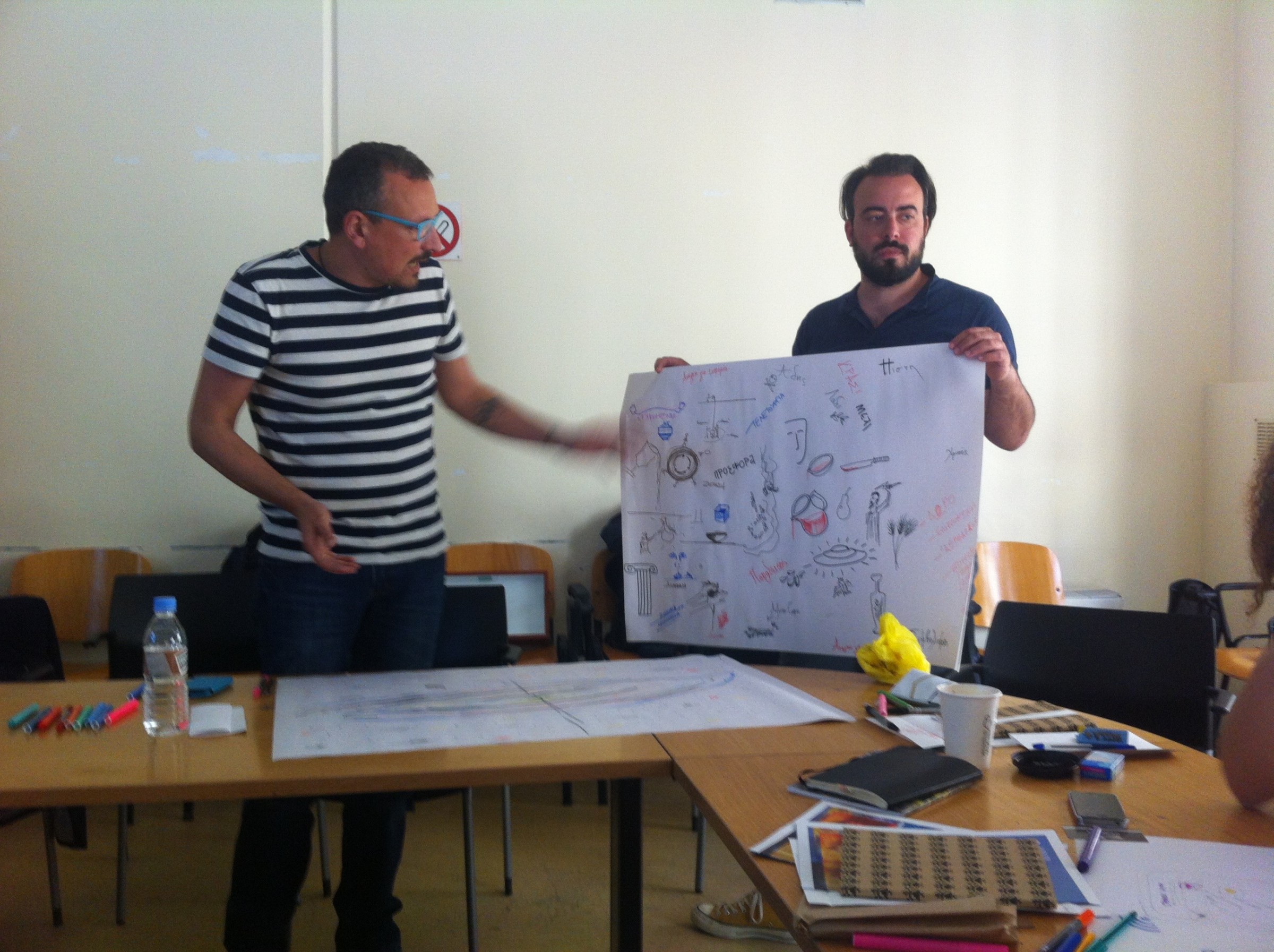
Φωτ: Στιγμιότυπο από τις εργασίες του “West of East”
Στα πλαίσια της συνεργασίας σου με το It’s All, Oh So Souvenir To Me, δημιούργησες το Sea Dry Stack / Lesvos island, το οποίο βασίζεται στο research based design. Πες μας περισσότερα.
Πράγματι. Το συγκεκριμένο αντικείμενο σχεδιάστηκε στα πλαίσια του project “West of East” που διοργανώσαμε από κοινού με την Άννα Πολυδώρου από το It’s all, Oh So Souvenir To Me, με τη συμβολή της Δέσποινας Καταπότη. Αρχαιολόγοι και σχεδιαστές συναντήθηκαν και έλαβαν μέρος σε ημερήσιες διαδρομές σε σημεία εξέχουσας αρχαιολογικής σημασίας της Λέσβου, σε ένα δημιουργικό εργαστήριο επαναπροσδιορισμού εννοιών της αρχαιότητας και σε μια συζήτηση στρογγυλής τραπέζης. Σκοπός ήταν να αναδυθούν ενδιαφέροντα ερευνητικά ευρήματα και θεματικές που θα μπορούσαν να μετουσιωθούν σε κάποιου είδους σουβενίρ από τους σχεδιαστές, στους οποίους παραδόθηκε ένα κιτ με εργαλεία για να καταγράψουν την προσωπική τους πολυαισθητική εμπειρία πριν σχεδιάσουν οτιδήποτε. Όλο το project, οι διαδρομές που επιμελήθηκαν οι αρχαιολόγοι, τα ευρήματα της ομάδας εργασίας και τα τελικά αντικείμενα των σχεδιαστών, συγκεντρώθηκαν σε μια έκδοση που είναι διαθέσιμη στο κατάστημα του It’s all, Oh So Souvenir To Me. Η προσωπική μου σχεδιαστική πρόταση πήρε τη μορφή ενός σετ μαγνητών, εμπνευσμένων από την τεχνοτροπία της μοναδικής Λεσβίας Λιθοδομής που συνάντησα στο νησί, με επίδραση από τις αφηγήσεις και την ιστορία του τόπου ως κόμβου συνάντησης. Τελικά, το σετ μαγνητών Sea Dry Stack / Lesvos island είναι τα τμήματα της θάλασσας που περικλείουν το νησί δίνοντάς του σχήμα και εμβαδόν, και όντας η οδός που δημιούργησε την πολιτιστική ποικιλομορφία του τόπου μέσα στους αιώνες. Απαρνούμενοι κάποιο από τα στοιχεία που έχουν σχηματίσει αυτόν τον τόπο, απομακρύνουμε κάποιο κομμάτι από το σετ, και το νησί μοιάζει ημιτελές. Κυριολεκτικά και μεταφορικά.
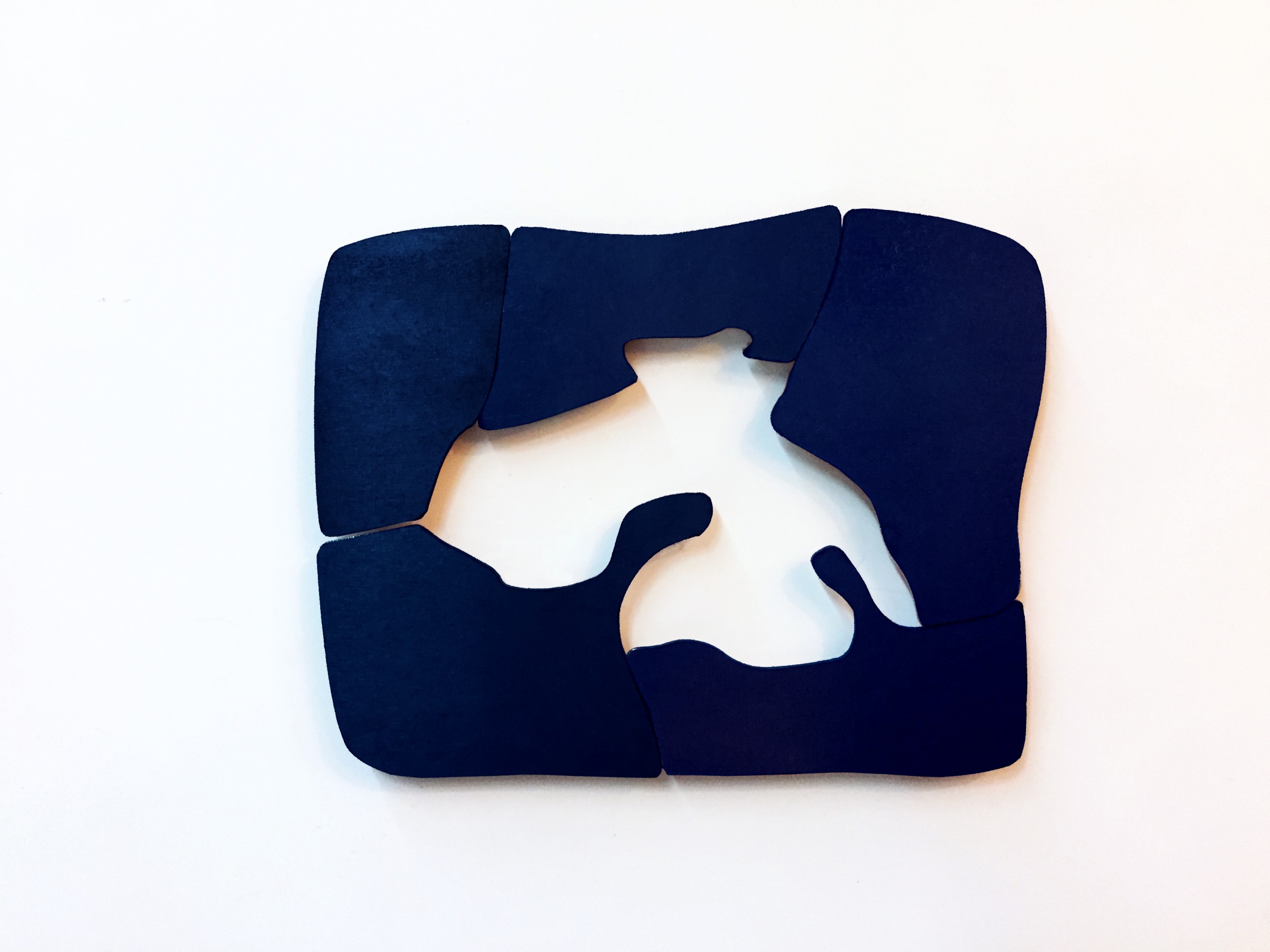
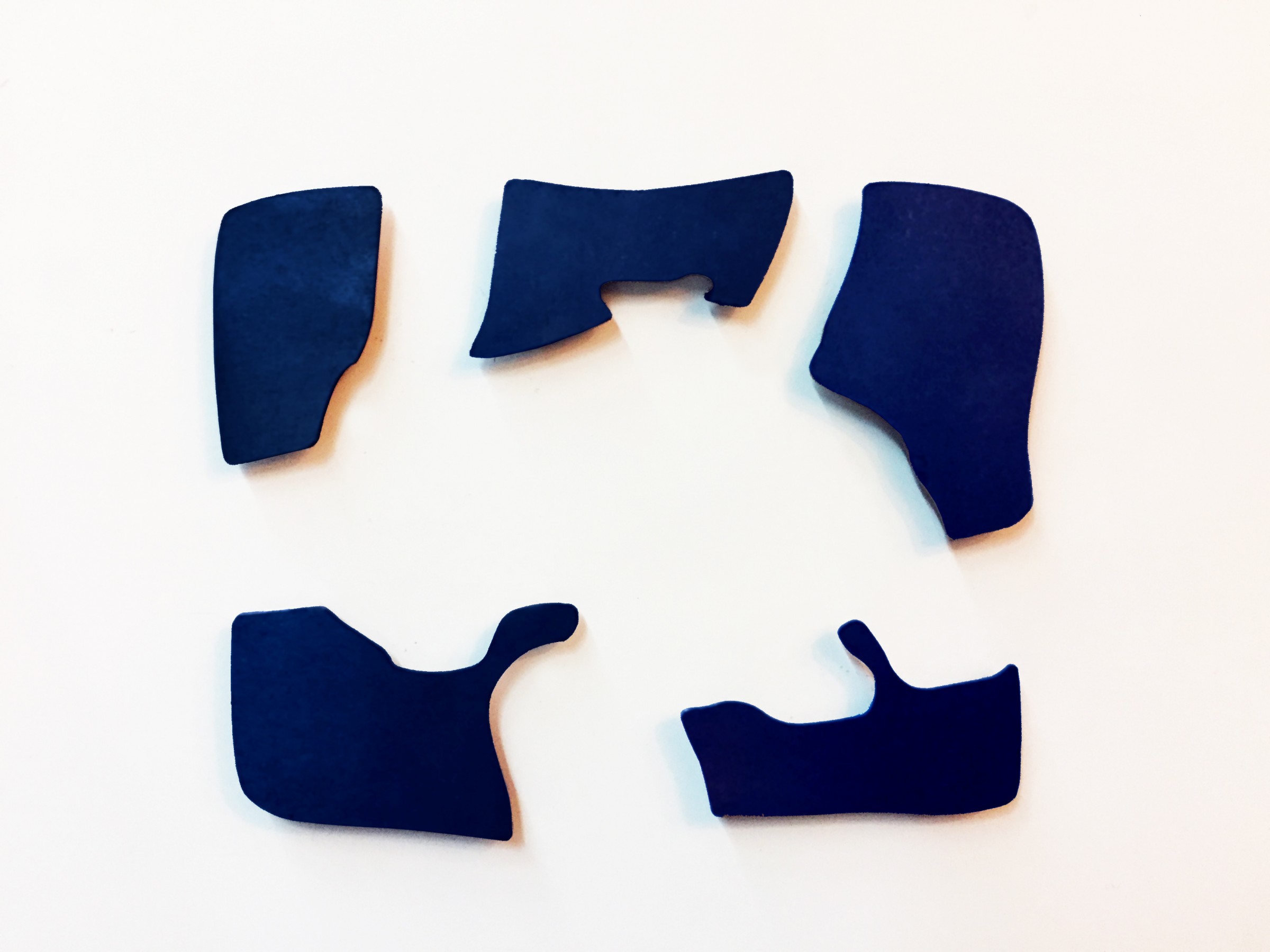
Φωτ: Sea Dry Stack / Lesvos island
Στο παρελθόν, έχεις καταπιαστεί με στοιχεία της ελληνικής υπαίθρου, όπως το μάρμαρο (ALKIONI) ή το σαμάρι (S.M.RI), τα οποία εντάσσεις σε νέα αντικείμενα με τη βοήθεια τεχνολογικών μέσων. Πώς θα περιέγραφες αυτή τη διαδικασία σχεδιασμού;
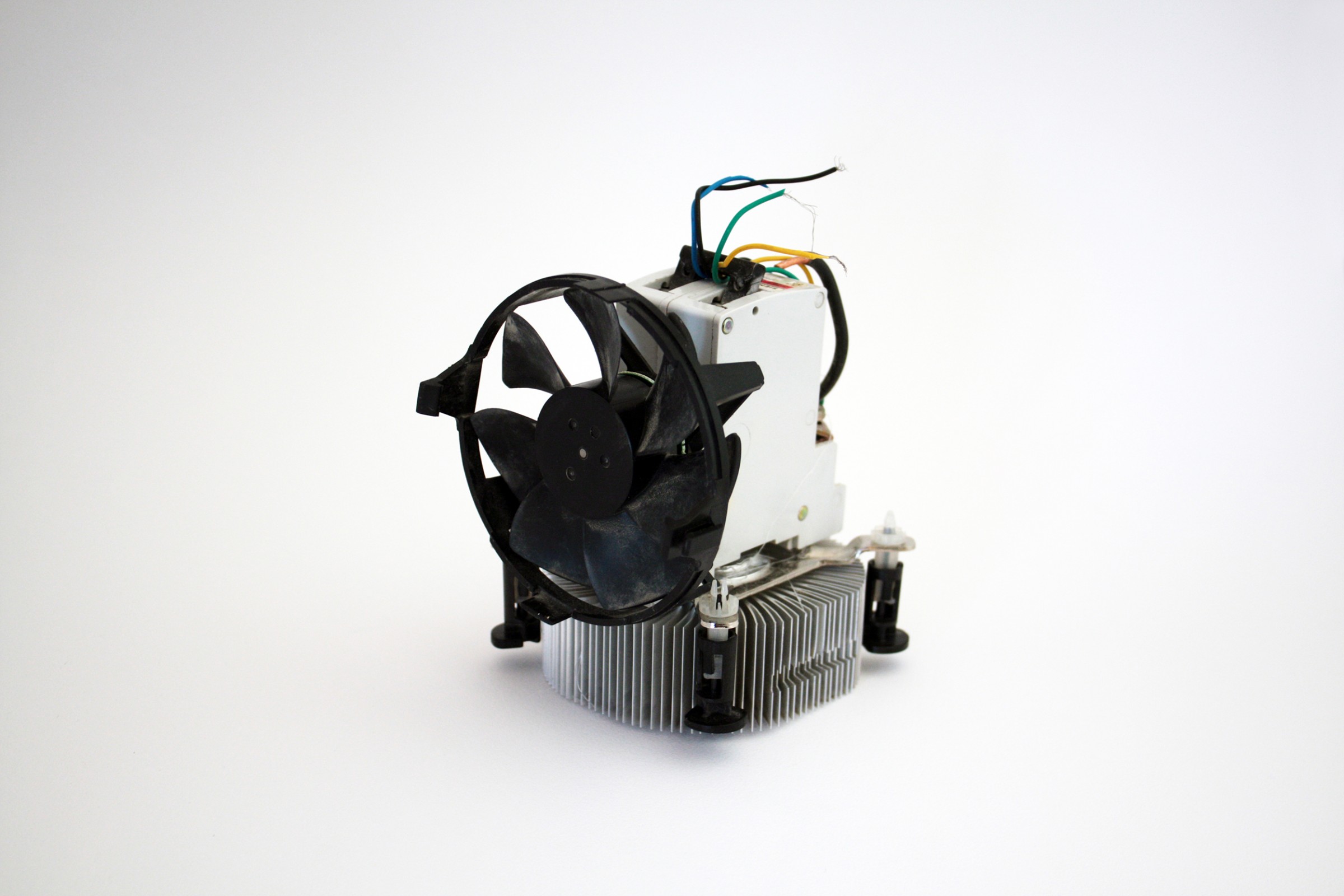
Το να φέρνει κανείς στοιχεία από το παρελθόν του ίδιου ή άλλου, να τα τοποθετεί στο σήμερα, εξυπηρετώντας σύγχρονες ανάγκες και χρησιμοποιώντας ό,τι η σύγχρονη τέχνη και τεχνική έχει να προσφέρει για να το κάνει πραγματικότητα, είναι ο τρόπος που η παράδοση αναζωογονείται, που οι σχεδιαστές υπηρετούν τους συνανθρώπους τους και που ο κόσμος μας εξελίσσεται. Αυτός ήταν ο σκοπός στα δύο έργα που αναφέρετε. Ειδικά στην ALKIONI, που σχεδιάστηκε το 2011, στόχευση ήταν να καταφέρουμε να συνδυαστεί η πολιτιστική βαρύτητα του μαρμάρου με τη σύγχρονη τεχνολογική ανάγκη της ψύξης ενός ηλεκτρονικού υπολογιστή μέσω ενός γλυπτού μικρής κλίμακας, κατασκευασμένο σε CNC. To S.M.RI, από την άλλη, παίζει περισσότερο με την εικόνα και τη μνήμη που κουβαλά η φόρμα ενός σαμαριού που λειτουργεί ως κάθισμα, συνδυάζοντας υλικά όπως το βαμμένο laser cut μέταλλο και το ναυτικό σχοινί, για να δημιουργηθεί ένα αντικείμενο εξωτερικού χώρου.
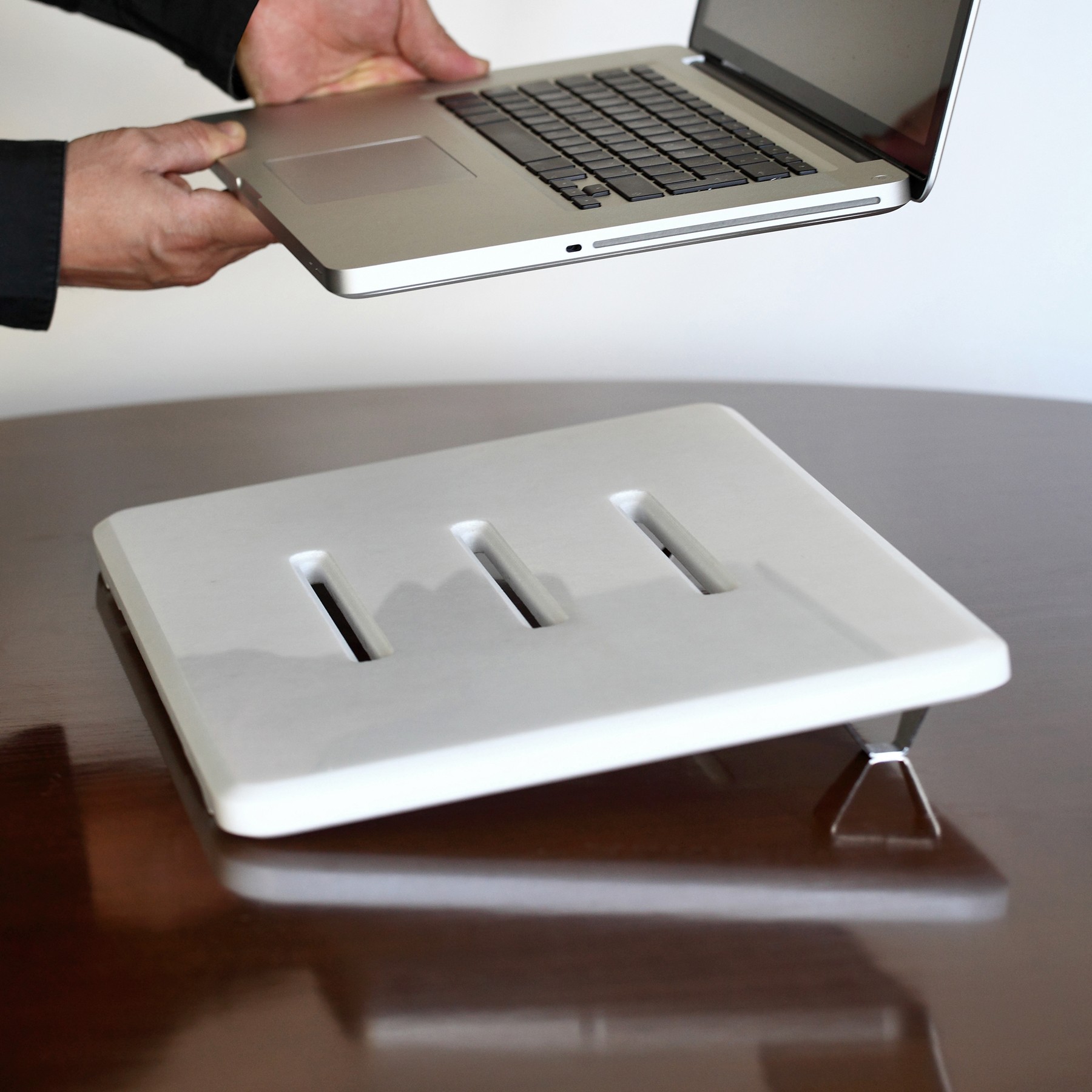
Φωτ: ALKIONI
Μια από τις πρώτες σου εργασίες στην Ελλάδα, η σφραγίδα Σ.Σ.Ρ.Μ., που τιμήθηκε στα ΕΒΓΕ το 2013, αντλεί έμπνευση από τη γραφειοκρατία που ταλαιπωρεί όλους μας. Είναι ο σαρκασμός και η κριτική ένα δυνατό έναυσμα για ένα είδος σχεδιασμού που καλεί τον άνθρωπο να σκέφτεται και να προσαρμόζεται;
Αναμφισβήτητα ο σαρκασμός και η κριτική καλούν και προσκαλούν ένα διαφορετικό σκεπτικό στον δέκτη ενός σχεδιαστικού έργου. Ενδεχομένως να αμφισβητεί προκαταλήψεις, να αποτυπώνει τον κοινό νου, τα κοινά «γιατί;», δημιουργώντας αναπάντεχες και ίσως άβολες εμπειρίες. Πέραν όμως του να αναζητά κανείς απαντήσεις σε «γιατί;», αναλύοντας και απαντώντας τελεσίδικα σε συγκεκριμένες ερωτήσεις, πιστεύω είναι σημαντικό να θέτουμε στους εαυτούς μας τις ερωτήσεις «γιατί όχι;» ή «και αν…;». Οι ερωτήσεις αυτές μας αναγκάζουν να σκεφτούμε εναλλακτικές. Και η αλήθεια είναι πως, ως σχεδιαστές, αν δεν καταφέρουμε σήμερα να οραματιστούμε εναλλακτικές για την πραγματικότητα την οποία θέλουμε, για τον κόσμο που θα επιθυμούσαμε, πώς θα μπορούσαμε ποτέ να υλοποιήσουμε κομμάτια του και να ζήσουμε σε αυτόν;
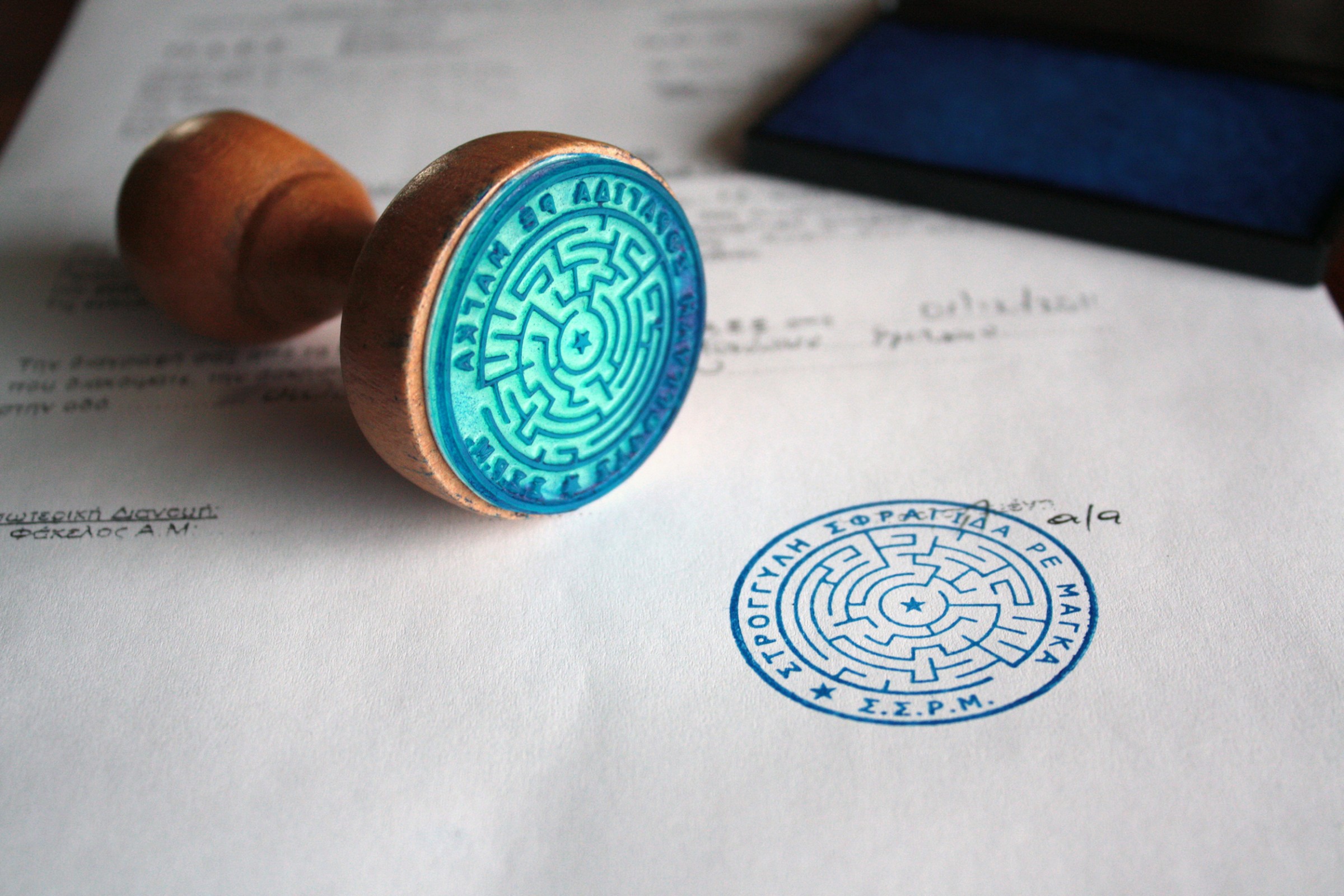
Φωτ: Στρογγυλή Σφραγίδα Ρε Μάγκα (Σ.Σ.Ρ.Μ.)
Διεθνώς, υπάρχουν τάσεις στο design που δεν εξυπηρετούν αποκλειστικά τη λειτουργικότητα και την αισθητική. Περιοχές όπως το critical design, το design fiction και το speculative design, θέλουν μέσω της δημιουργίας τεχνουργημάτων να θέσουν ερωτήματα για τον τρόπο που ζούμε, για το πώς θα μπορούσαμε να ζούμε στο άμεσο μέλλον, αλλά και για το ποια θα ήταν η υλική και εμπειρική υπόσταση κάποιου μέλλοντος που προτιμούμε να ζήσουμε ή όχι. Μοιραία, λοιπόν, όταν κανείς παρουσιάζει κάποιο μέλλον μέσω ενός αντικειμένου σήμερα, δίνει αφορμή για συζητήσεις και ωσμώσεις. Όπως έγινε και με την ιστοσελίδα Druid de Parnes, που μετά τη δημιουργία της είχα συζητήσεις με ανθρώπους που ενδιαφέρονταν για την αναδόμηση τροφίμων και πώς αυτό επιτυγχάνεται. Φυσικά το project δεν είχε πρόθεση να γίνει επιχειρηματική ιδέα, αλλά να μπορέσουμε να φανταστούμε πώς θα υλοποιούνταν ένα μέλλον όπου οι παραδοσιακές γεύσεις και η υψηλή τεχνολογία τροφίμων θα μπορούσαν να συνυπάρξουν σε ένα νέο προϊόν και υπηρεσία για τον σύγχρονο άνθρωπο.
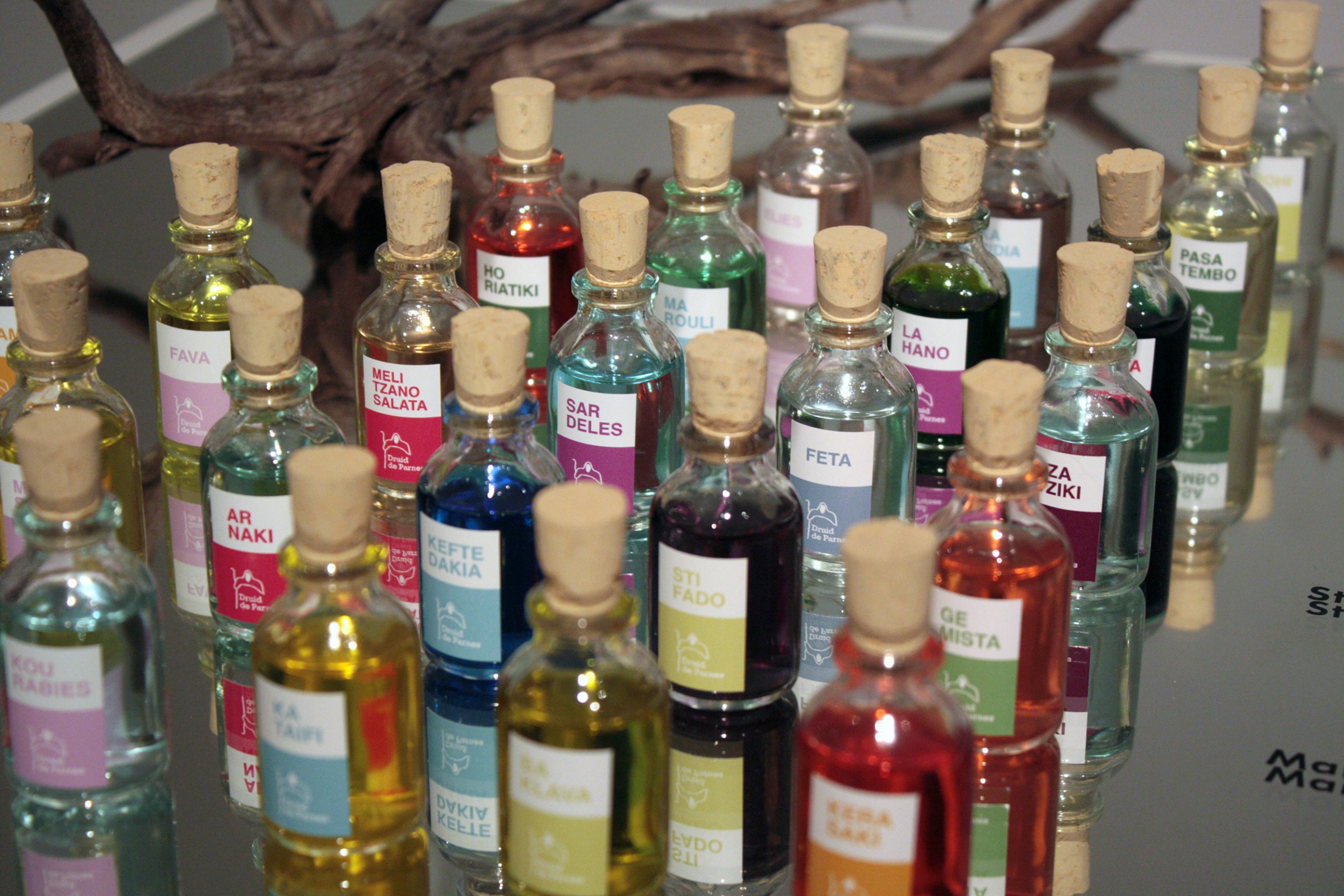
Φωτ: Druid de Parnes
Ένα project που μας κέντρισε το ενδιαφέρον, πέρα από τα όρια του object design, είναι το Hebocon Athens. Το πρωτότυπο “πρωτάθλημα” κατασκευής ρομπότ από καθημερινά υλικά απευθύνεται σε άτομα κάθε ηλικίας χωρίς εξειδικευμένες γνώσεις. Πώς πιστεύεις ότι αυτή η διοργάνωση μπορεί να αλλάξει τον τρόπο που αντιλαμβανόμαστε τη χρησιμότητα και την πολυπλοκότητα του design, ήδη από μικρή ηλικία;
Κάποια workshop που διοργανώνω εστιάζουν στην ανάπτυξη της δημιουργικότητας, ενώ άλλα εστιάζουν στη διαμόρφωση εταιρικής κουλτούρας και στη λήψη επιχειρηματικών αποφάσεων. Το κοινό σε καθένα από αυτά είναι διαφορετικό, από παιδιά 10 - 12 ετών, έως και πολύπειρα στελέχη επιχειρήσεων. Το Hebocon Athens είναι το μοναδικό event όπου μπορούν όλοι οι παραπάνω να συνυπάρξουν. Ακολουθώντας τις προδιαγραφές του Hebocon στην Ιαπωνία, πρόκειται για έναν διαγωνισμό ρομποτικής για τεχνικά μη χαρισματικούς δημιουργούς, όπου οι συμμετέχοντες φτιάχνουν το δικό τους «ρομπότ», περιοριζόμενοι από απλούς κανόνες, και συμμετέχουν ανά δύο σε αγώνες ρομπότ-σούμο. Βασικός σκοπός είναι η απενοχοποίηση της “αποτυχίας” και η επιβράβευση της διαρκούς προσπάθειας για βελτίωση. Αναγνωρίζοντας πως κάθε “αποτυχία” αποτελεί ένα βήμα πιο κοντά στην “επιτυχία”, το πνεύμα του Hebocon εστιάζει στην εκπαιδευτική αλλά και ψυχαγωγική αξία της “ήττας”, όπως αυτή συμβαίνει στο πλαίσιο ενός διασκεδαστικού διαγωνισμού αλλά και της καθημερινότητας εν γένει. Εξαίροντας την αξία της αποκλίνουσας και δημιουργικής σκέψης, το Hebocon χρησιμοποιεί τον όρο “ρομπότ” σχεδόν καταχρηστικά και προάγει δεξιότητες που σχετίζονται με την κριτική σκέψη, την πρακτική και οπτική αντίληψη, την αφηγηματικότητα και τον διαρκή δημιουργικό πειραματισμό για την επίλυση ενός ζητούμενου.
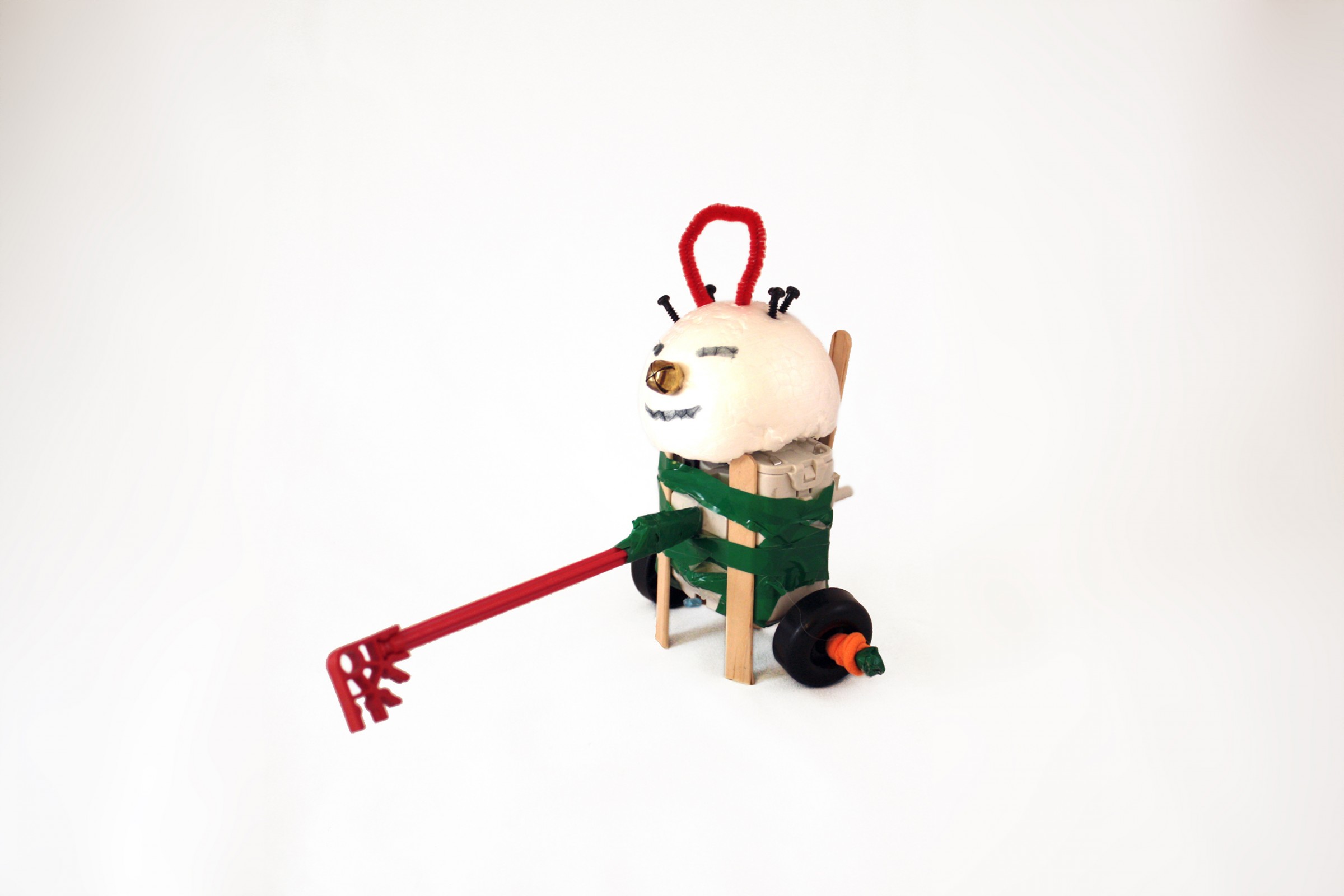
Φωτ: Δημιουργίες από το Hebocon Athens
Το Hebocon Athens μάς φέρνει οργανωμένα στη θέση του δημιουργού, πιθανώς μας δείχνει πως κάθε τεχνούργημα του ανθρώπου είναι ένα work in progress και πως η επόμενη εκδοχή μπορεί να είναι καλύτερη. Μας δείχνει επί του πρακτέου τον μόχθο που χρειάζεται η επίτευξη της αρτιότητας και, ίσως ασυνείδητα, ένα μέτρο που θα έπρεπε να έχουν οι καταναλωτικές μας απαιτήσεις σε σχέση με το εφικτό. Το βέβαιο είναι πως οι άνθρωποι μικρής ηλικίας τα καταφέρνουν πολύ καλύτερα από τους μεγαλύτερους σε αυτή τη χαοτική και ανοιχτή διαδικασία που βλέπουν ως παιχνίδι. Και αυτό θα έπρεπε να μας προβληματίζει όχι μόνο ως άτομα, αλλά και ως κοινωνικό σύνολο.
Ίσως είναι η ώρα να οργανώσω το επόμενο τουρνουά μόνο για μεγάλους.
Θα έρθετε;
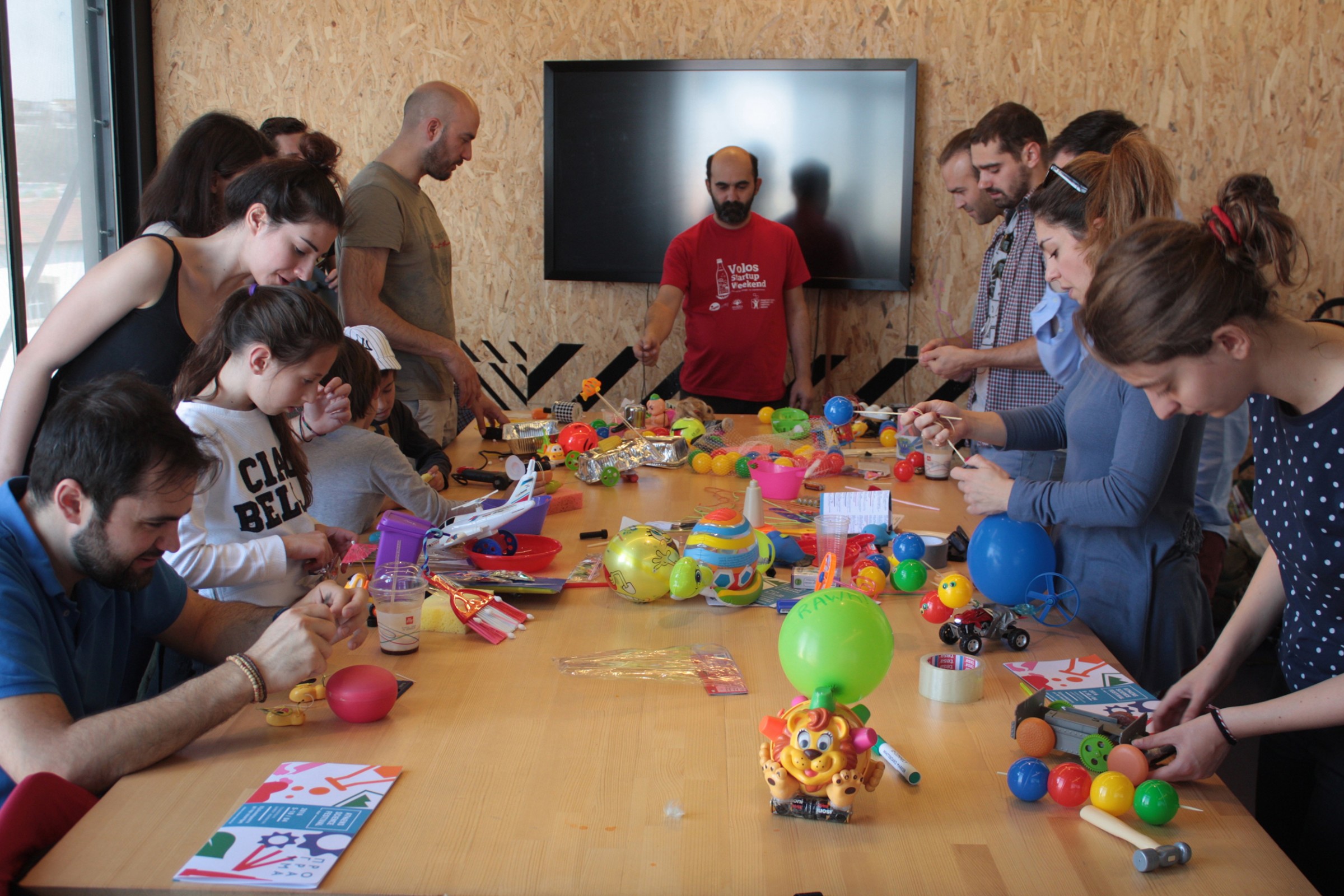
Φωτ: Στιγμιότυπο από τις εργασίες του Hebocon Athens
Ευχαριστούμε πολύ τον Κώστα Μπίσα και ελπίζουμε να τα πούμε από κοντά στο επόμενό του event.
.jpg)
 (1).jpg)