



Η Πολίνα Μίλιου παρουσίασε για πρώτη φορά στο ελληνικό κοινό το παιχνιδιάρικο design με επίδραση από τις Κυκλάδες
DS.WRITER:
Vasilis Xifaras

Κεντρική εικόνα: George Sfakianakis
Περιγράφεται από λάτρεις του design και δημιουργούς, ανάμεσά στους οποίους είναι και ο Κώστας Λαμπρίδης, ως μια ανερχόμενη καλλιτέχνιδα. Η Πολίνα Μίλιου, με σπουδές στην Αρχιτεκτονική Σχολή του Ε.Μ.Π και εργασιακή εμπειρία ως σχεδιάστρια στο Willo Perron and Associates, ανάμεσα σε άλλα γραφεία στο Los Angeles, κατακλύζει τα μέσα με τις παιχνιδιάρικες και μονολιθικές δημιουργίες της. Η πρώτη ύλη είναι κάτι πολύ απλό, ο χαρτοπολτός που επενδύει εξωτερικά έναν ξύλινο σκελετό, μπορεί όμως να δώσει το έναυσμα για την κατασκευή μοναδικών γλυπτικών αντικειμένων που μπορούν να χρησιμοποιηθούν. Κάθε αντικείμενο είναι για την ίδια ένας ξεχωριστός χαρακτήρας, και φαίνεται ότι για το «πλάσιμό» του έχει δαπανηθεί χρόνος και σκέψη στον πειραματισμό.
Το ελληνικό κοινό απέκτησε την ευκαιρία να δει από κοντά (και να ακουμπήσει) τα αντικείμενα που απαρτίζουν τη νεότερη συλλογή της Πολίνας με τίτλο «KYKLOS», στην Carwan Gallery στον Πειραιά, από τη 1 Σεπτεμβρίου ως τις 29 Οκτωβρίου 2022. Πρόκειται για την πρώτη solo έκθεση γυναίκας Ελληνίδας δημιουργού στην πλέον αγαπημένη gallery σύγχρονου design της Αθήνας, που λειτουργεί υπό τη διεύθυνση των Nicolas Bellavance-Lecompte και Quentin Moyse. Η πίστη στο papier mâché παραμένει σταθερή, μόνο που αυτή τη φορά ο πολτός αποτελείται από σκουπίδια που η Πολίνα συνέλεξε από τις Κυκλαδίτικες παραλίες. Αυτά συναντούν αντικείμενα που η ίδια βρίσκει σε flea market, με ιδιαίτερη αγάπη προς τις αρχετυπικές καρέκλες, και το αποτέλεσμα είναι αυτές οι οργανικές μονόχρωμες μορφές, που αναφέρονται στις διαφορετικές θέσεις και αποχρώσεις που παίρνει ο ζεστός Κυκλαδίτικος ήλιος μέσα στην ημέρα, εξ ου και το όνομα «κύκλος».
Μιλήσαμε με την Πολίνα Μίλιου και την Carwan Gallery για να ακούσουμε τις εντυπώσεις μετά το κλείσιμο αυτής της επιτυχημένης έκθεσης.
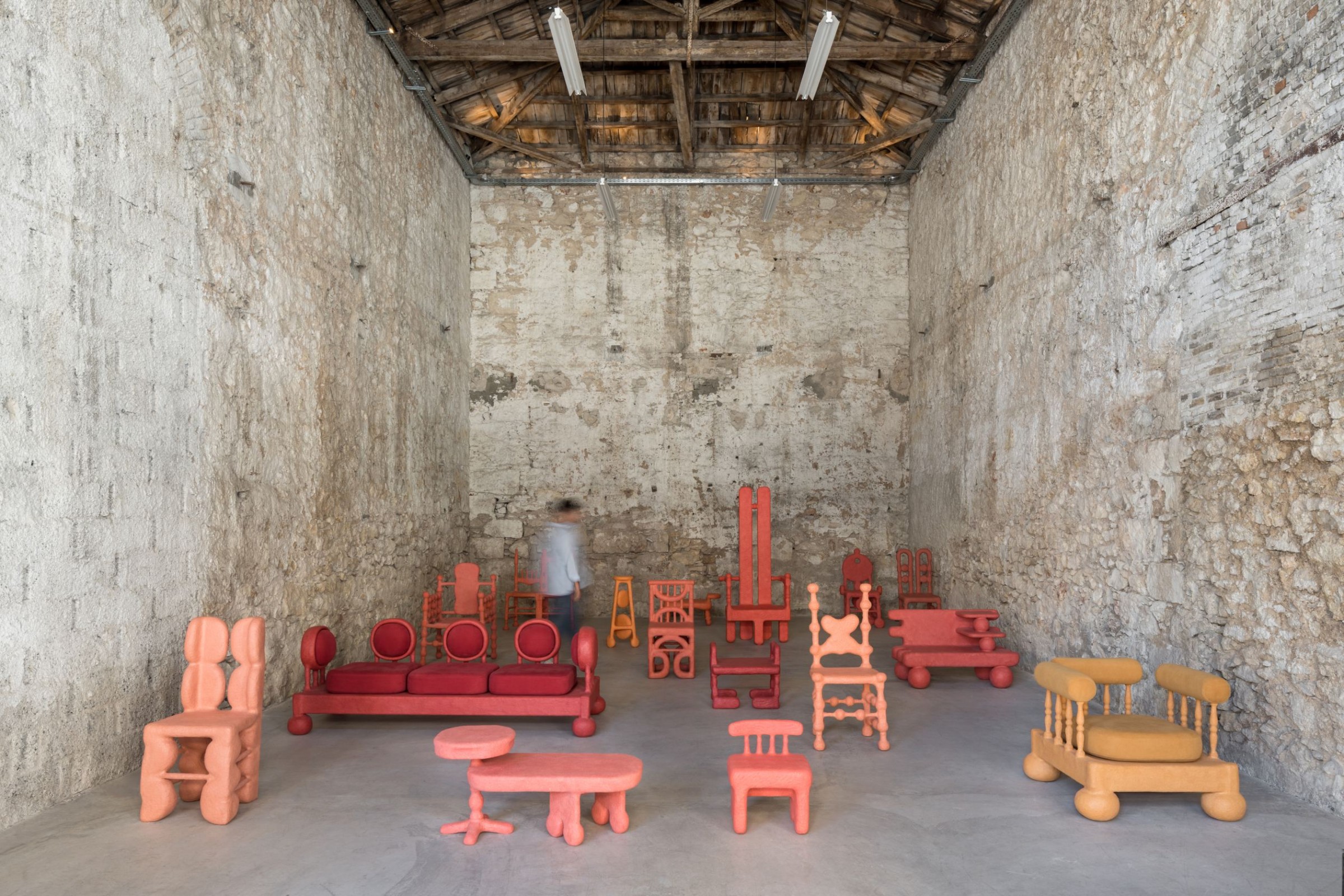
Φωτ: George Sfakianakis
Περιγράφεις την έμπνευσή σου ως ένα κράμα από τα πρώιμα Κυκλαδίτικα "αφηρημένα" γλυπτά και τη σύγχρονη ποπ κουλτούρα του animation και των video games. Πώς αυτή η σύνδεση μετουσιώνεται στα αντικείμενά σου;
Οι χειροποίητες μέθοδοι που ακολουθώ συχνά μεταφράζονται σε ασαφείς, ανθρωπομορφικές και ζωομορφικές φόρμες που προκύπτουν από αναφορές στην Κυκλαδική τέχνη, αλλά και τον πριμιτιβισμό ή τη μεσογειακή ανώνυμη αρχιτεκτονική. Οι φιγούρες αυτές δίνουν μία αίσθηση ζωής, σαν να αναπαριστούν οντότητες, και τελικά όλη η διαδικασία δημιουργίας μοιάζει με την οικοδόμηση ενός φανταστικού κόσμου από καινούριους χαρακτήρες. Για τη δημιουργία αυτών των χαρακτήρων συχνά αντλώ στοιχεία από μορφές της ποπ κουλτούρας και των παιχνιδιών, που δίνουν ταυτότητα στις φόρμες, αλλά και τις φέρνουν στο σήμερα.
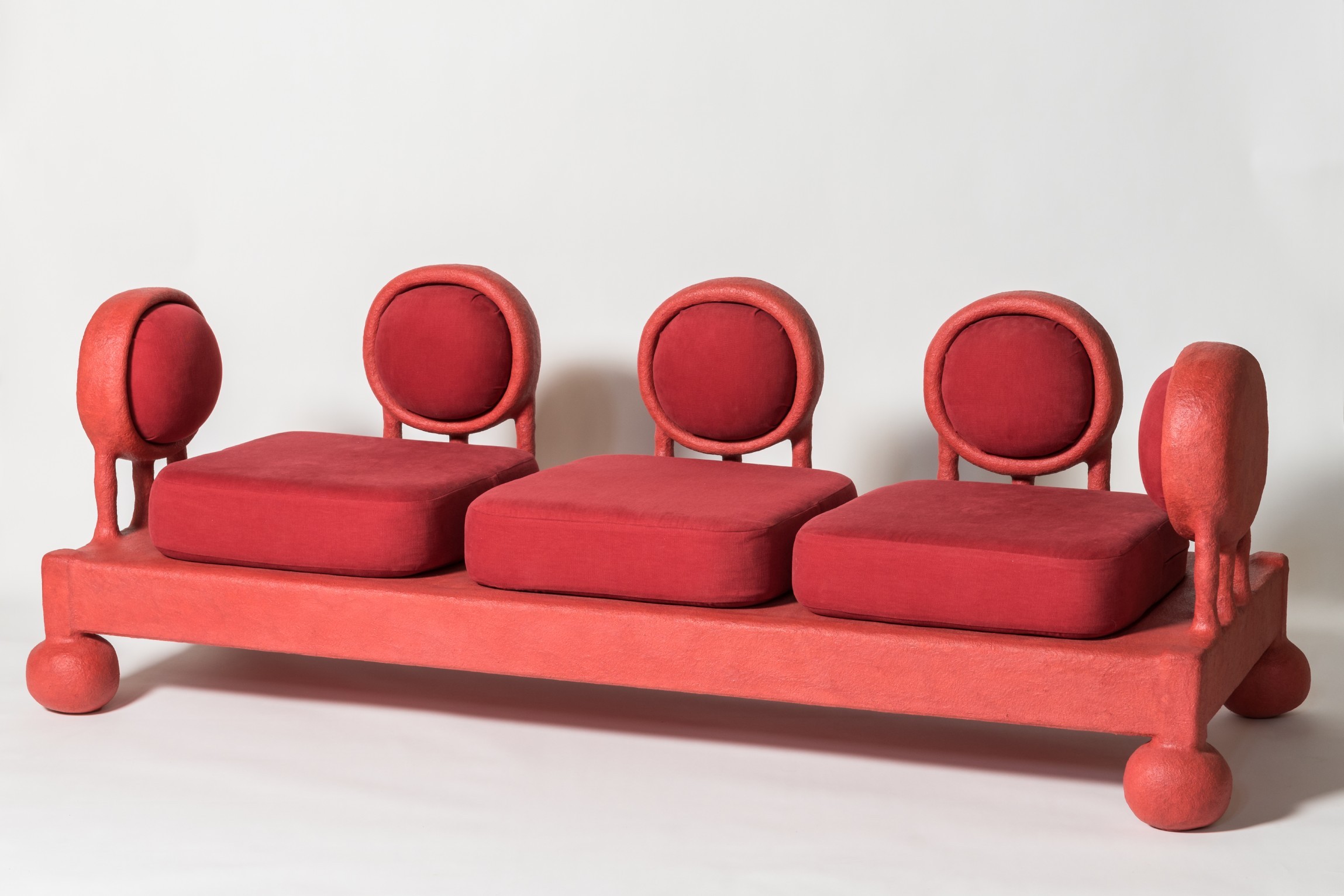
Irotile. Φωτ: George Sfakianakis
Ανάλυσέ μας το concept της έκθεσης.
Η έκθεση ξεκίνησε με αφορμή δύο έργα που είχα φτιάξει έναν χρόνο πριν, από δύο παραδοσιακές καρέκλες που είχαν βρεθεί στα χέρια μου. Ξεκίνησα λοιπόν από παραδοσιακά ή λαϊκά έπιπλα, με βασικό χαρακτηριστικό το ότι ήταν ανεπιθύμητα ή παραμελημένα. Ακολούθησα τη λογική του upcycling, δηλαδή της ανακύκλωσης υλικών και αντικειμένων που είναι ταπεινά και υποτιμημένα, στα οποία στη συνέχεια αποδίδω ένα καινούριο απροσδόκητο μέλλον που δε θα είχαν διαφορετικά. Τα ίδια τα υλικά που χρησιμοποιώ, όπως το χαρτί ή ο αφρός πολυουρεθάνης, μπαίνουν και αυτά σε αυτή τη διαδικασία επανεκτίμησης της αρχικής τους αξίας.
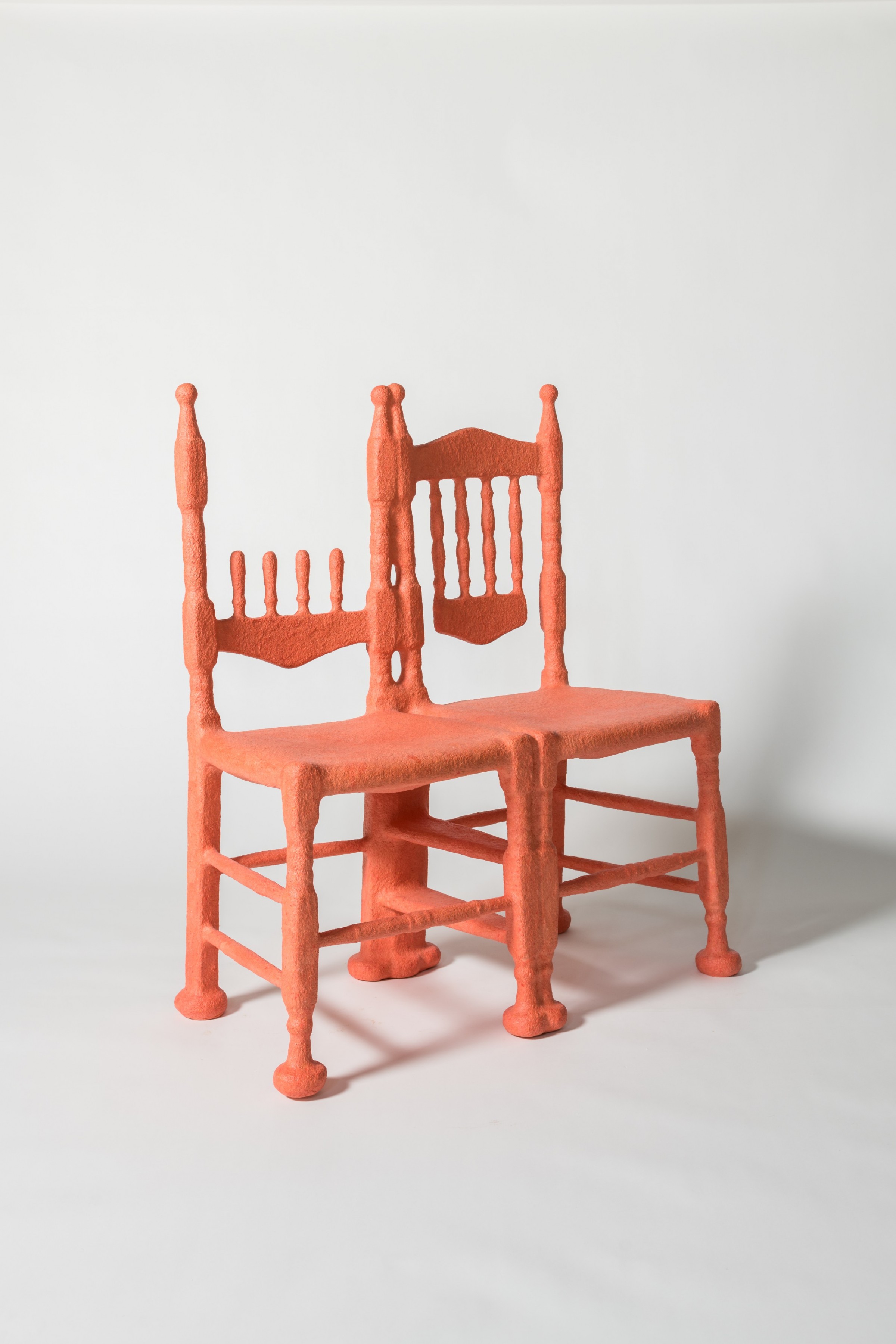
Allele Chairs. Φωτ: George Sfakianakis
Πόσο δύσκολο ήταν αυτό το εγχείρημα για μια νέα designer σαν εσένα;
Ήταν μια σειρά έργων που δημιουργήθηκε σε τρεις μόλις μήνες, χρόνος λίγος για τον αριθμό των έργων αλλά και τις χειρωνακτικές τεχνικές που ακολουθώ. Αλλά μπήκα σε αυτόν τον κόσμο σχεδόν εμμονικά κατά τη διάρκεια αυτών των μηνών. Οι αποφάσεις που έπαιρνα ήταν γρήγορες και προέκυπταν από τη διαρκή και προσωπική επαφή μου με τα αρχικά αντικείμενα.
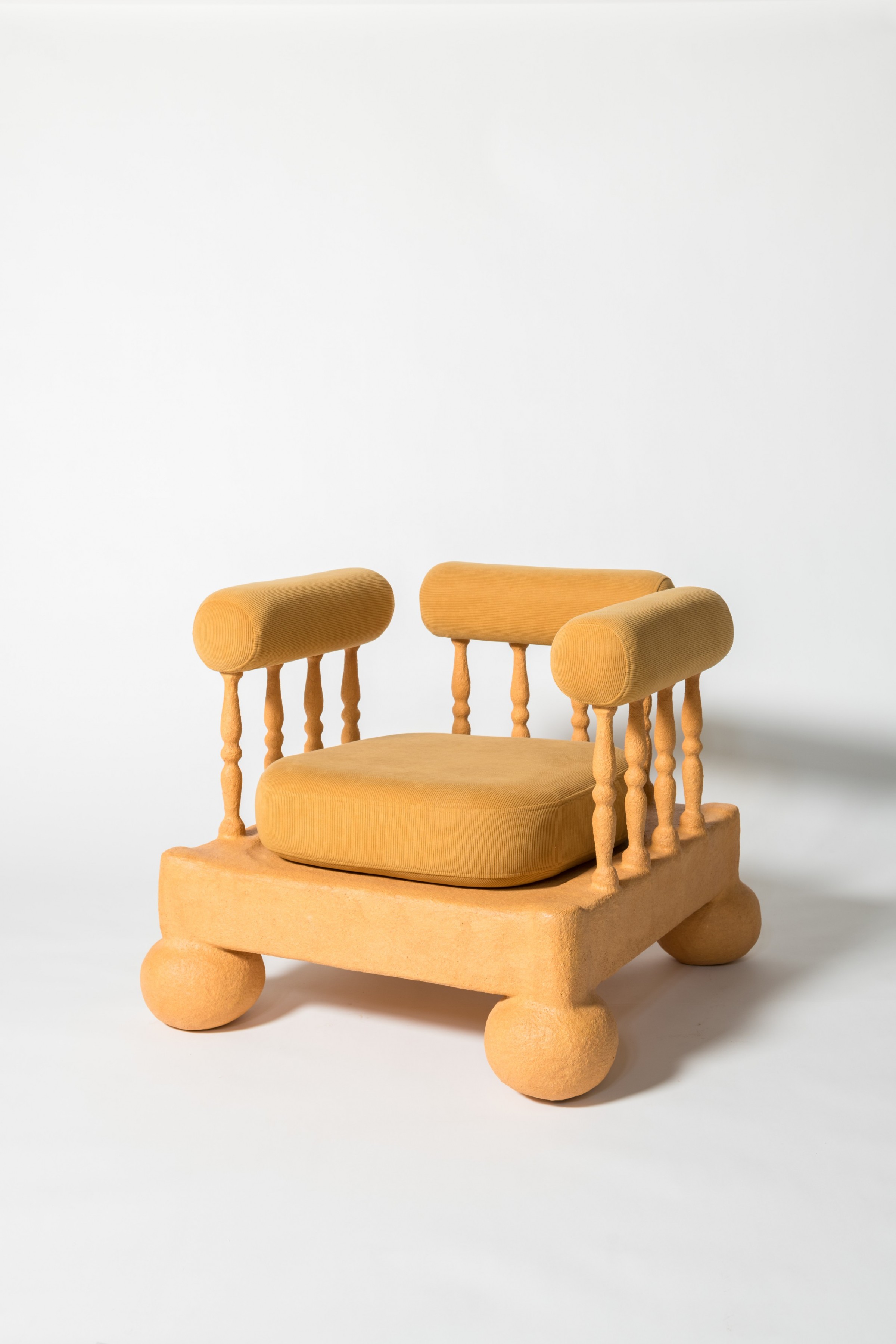
Nefi. Φωτ: George Sfakianakis
Ποια ήταν η αντίδραση του κοινού και το feedback;
Ήταν πολύ ευχάριστο να βλέπω την αλληλεπίδραση του κοινού με τα αντικείμενα. Σχεδόν κάθε επισκέπτης επιζητούσε την επαφή και αφιέρωνε περισσότερο χρόνο από όσο αρχικά θα περίμενα σε έναν εκθεσιακό χώρο. Υπήρχε μία αίσθηση performance, έβλεπα άτομα να ποζάρουν με τα αντικείμενα, να τα ονομάζουν ή να διαλέγουν ποιος “χαρακτήρας” τούς αντιπροσωπεύει. Ένα συχνό σχόλιο ήταν το πόσο ζωντανά φαίνονται, σαν να έχουν στηθεί για να ξεκινήσουν μία παράσταση.
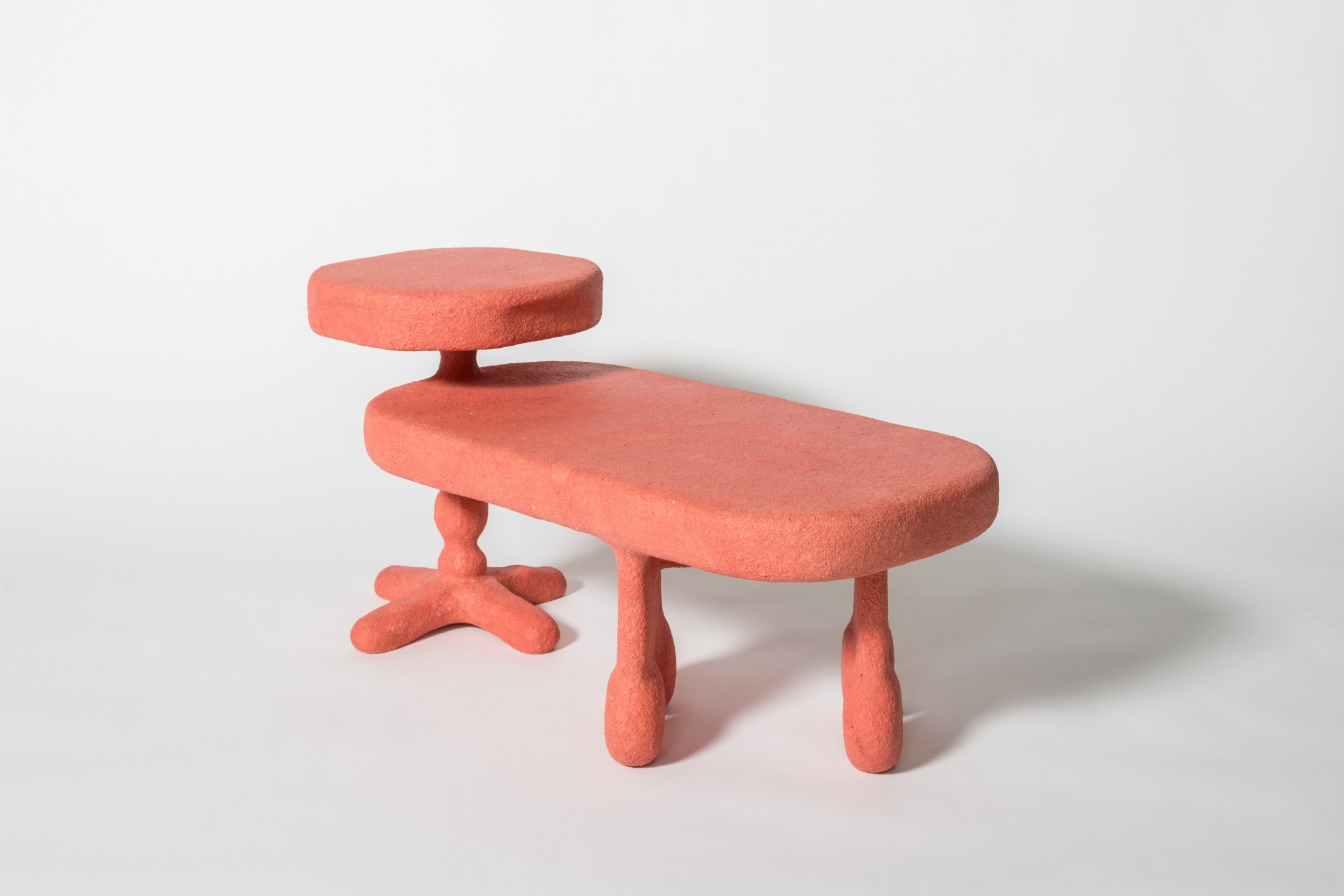
Koutsoboli. Φωτ: George Sfakianakis
Πες μας τα σχέδιά σου για το μέλλον.
Αυτή τη στιγμή πειραματίζομαι με πιο πολύπλοκες μορφές και χρήσεις που προκύπτουν από την ένωση υπαρχόντων επίπλων. Αλλά και με την εξερεύνηση παραδοσιακών υλικών, όπως της ψάθας, του πλεξίματος ή του υφάσματος. Με ενδιαφέρει πολύ να τα δω σε αντιπαράθεση με τον χαρτοπολτό.
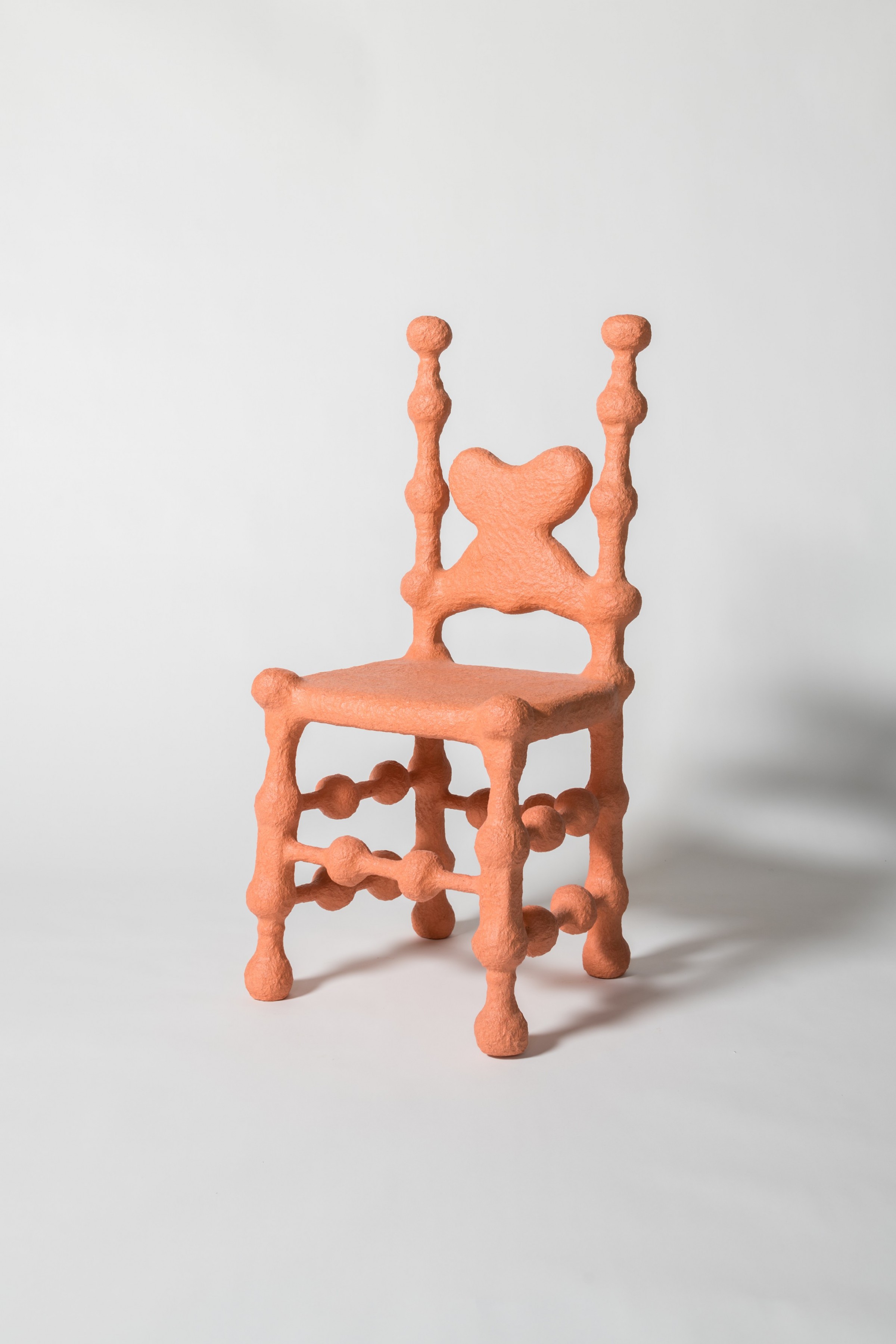
Heart Chair. Φωτ: George Sfakianakis
Ευχαριστούμε πολύ την Πολίνα Μίλιου και την Carwan Gallery.
.jpg)
 (1).jpg)